
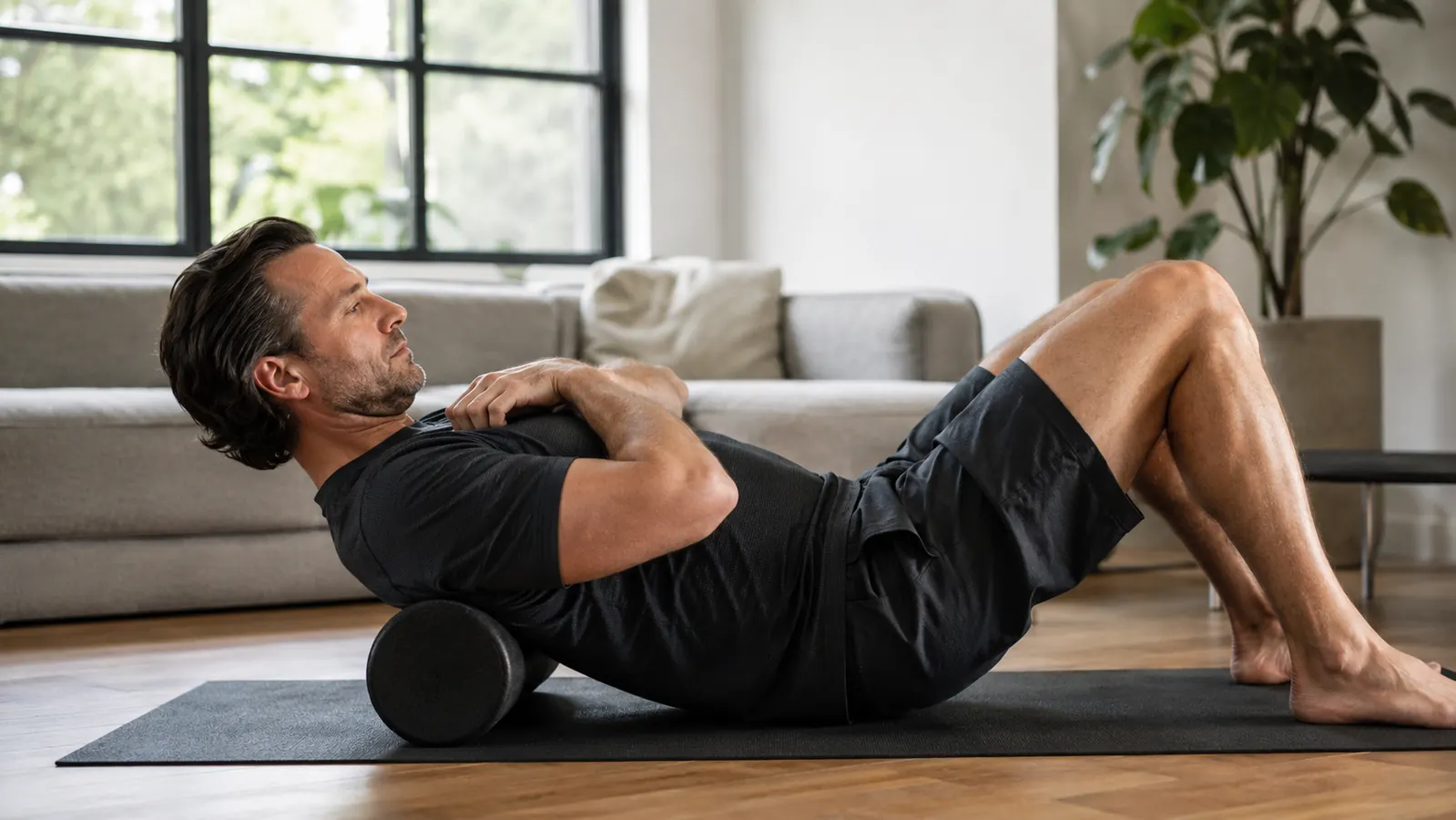
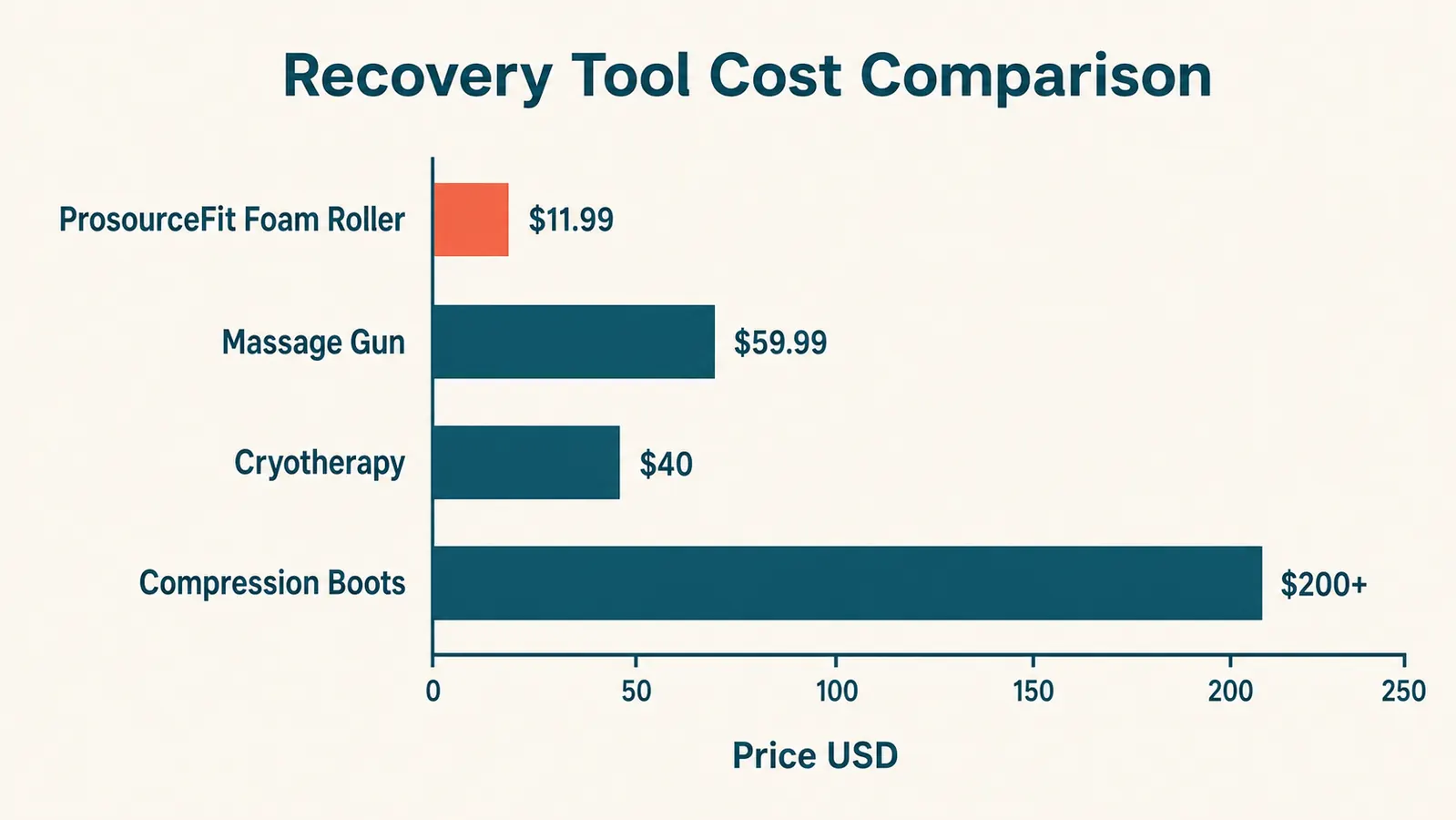
Here is the thing nobody writes in foam roller reviews: most people buy the wrong density for what they actually do. They grab whatever is cheapest on Amazon, use it twice, decide foam rolling is overrated, and go back to skipping cool-downs. The ProsourceFit High Density Foam Roller sits right at the crossroads of this problem. At a budget-friendly price, it is the price that catches bargain hunters. But density is where most buyers get confused, and I want to be direct about what that means for you before you add it to your cart.
I have been using this roller in my garage gym rotation after Saturday long runs, 8 to 12 miles on technical trail, and after heavy squat and deadlift sessions. I am 44, 197 pounds, and my recovery toolkit has gone through a lot of iterations over the years. I know what soft rollers feel like, what they stop doing after four months, and why they fail. I also know what firm rollers feel like on day one when your quads are genuinely wrecked and you are questioning every life choice that led you to trail running. That context matters for this review.
The Quick Verdict
Legitimately better than 80 percent of budget rollers on the market, but with real size limitations and a pain curve that sends beginners running.
Amazon Check Today's Price →Tired of buying soft rollers that feel like a pool noodle after three months?
The ProsourceFit holds its density through consistent use in a way that budget EPE foam simply does not. Check today's price before you spend twice as much on a roller that does the same job.
Amazon Check Today's Price on Amazon →What I Have Actually Used It For
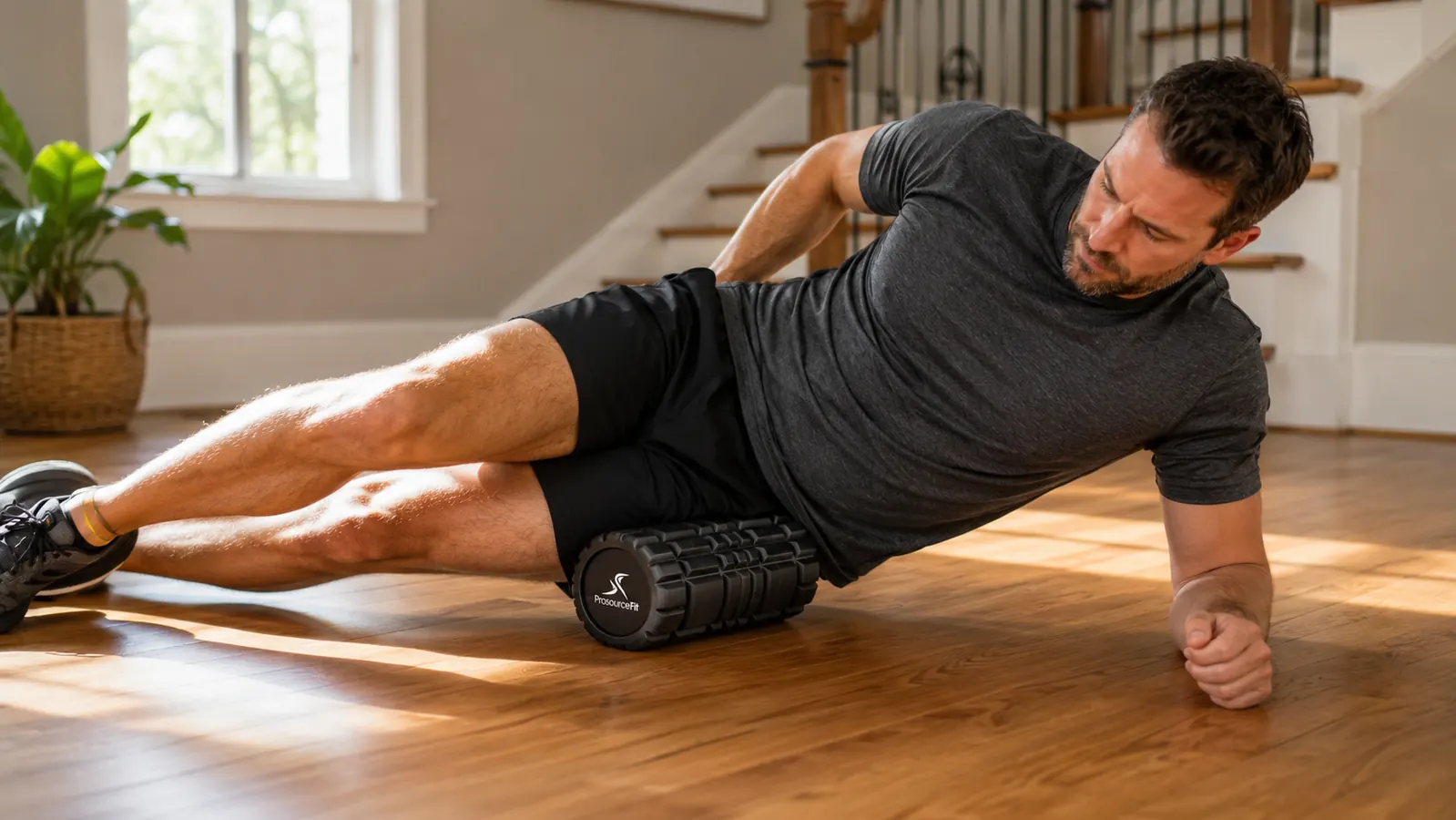
My main use for this roller is quad work after hard Saturday runs. When you come back from 10 miles on uneven terrain, your quads are not just sore in the broad way, they develop specific tight bands, usually in the distal third, just above the knee. Broad-contact rolling on a firm cylinder hits those areas in a way that stretching alone never does. I roll slow, about one inch per second, from knee to hip crease, parking on the spots that make me involuntarily hold my breath. That is the correct technique and a firm roller makes it possible.
I have also used this for adductor work after heavy squat days, and for the low-back region, specifically the erector area adjacent to the spine rather than the spine itself. Foam rolling directly on the lumbar spine is not a great idea, but rolling the paraspinal muscles on either side provides real relief after a session that goes heavy on Romanian deadlifts. The 12-inch size is actually useful for this because you can position it precisely on one side without the roller extending to the wrong area.
Where I stopped using it: anything above mid-thoracic. That is not a knock on the roller specifically. It is a size problem. If you want thoracic extension across the full upper back, you need a longer roller or you spend the whole session scooting and repositioning. I gave up and started using a different 24-inch option for that purpose. The ProsourceFit now lives in the post-run kit and the shorter, targeted sessions. Fit the tool to the task.
The Density Confusion That Gets Most Buyers in Trouble
Walk into any sporting goods store or browse Amazon for foam rollers and you will see two types, though they are rarely labeled honestly. The first type is made of EPE foam, expanded polyethylene. It is the white or light-colored stuff, cheap to manufacture, feels soft and forgiving right out of the box. The second type uses EVA foam, ethylene-vinyl acetate, or high-density polyurethane. This is what the ProsourceFit uses, and it is noticeably firmer to the touch before you even put weight on it.
The problem is that EPE foam looks fine on day one. It holds shape well enough when you press it with your hand in the store or at the kitchen table. The difference only shows up under sustained load and repeated compression over weeks of real use. EPE foam has a memory problem: it compresses under your body weight, and each session it recovers a little less. By month three to four of regular use, a quality EPE roller feels noticeably softer than it did when you bought it. By month six, you are basically rolling on a slightly firm pool noodle. You lose the contact you need to affect the tissue.
The ProsourceFit uses the denser foam, which is what allows it to hold its shape under a 197-pound person session after session. When I press my full body weight into this roller, the deformation is minimal. When I put the same weight into a budget EPE roller I kept around for comparison, it compresses by what I estimate is a third of its original diameter. That compression difference translates directly to the pressure you can generate on the muscle and fascia. Less compression equals less contact equals less effect. That is the density conversation most reviews skip.
The Pain Curve: What First-Timers Get Wrong
If you have never used a high-density foam roller before, your first session on this thing will likely feel like punishment. That is not because the roller is defective. It is because myofascial release on untreated tissue is uncomfortable, and a firm roller makes it more uncomfortable than a soft one. People who are new to rolling often buy the cheap, soft roller first, find it manageable, and then try a firm roller and assume they did something wrong. They did not. The discomfort is the mechanism.
The question is whether the discomfort is productive or harmful. Productive: a deep ache or pressure sensation that gradually releases as you hold position. Harmful: sharp, stabbing, or joint-adjacent pain. If you are hitting the former, you are on track and the discomfort diminishes over two to three weeks as the tissue adapts. If you are hitting the latter, you are either on a bony structure or an inflamed area and you need to back off. A firm roller accelerates that adaptation curve. Some people appreciate the directness of that. Others find it off-putting enough to abandon rolling altogether, and for those people, starting with a softer tool and working up makes more sense.
A firm roller does not hide what is wrong with your tissue. That is the honest reason some people hate it and others swear by it.
The 12-Inch Size Problem Nobody Mentions in the Marketing
ProsourceFit sells this roller in a 12-inch length, and also in a 24-inch version at a slightly higher price. The product page describes the 12-inch as good for all the major muscle groups, and that is technically accurate in the same way that saying a compact car can seat five adults is technically accurate. It can. Whether it is comfortable depends on what you are actually trying to do.
For quad rolling, adductors, calves, and single-sided lower-back work, the 12-inch is genuinely fine. You have enough length to work a full muscle belly without the roller being so short it slips off to one side. For full thoracic spine work from the base of the shoulder blades up to the base of the neck, the 12-inch requires you to reposition two to three times per session, which breaks the flow and makes the work less effective. For full quad rolling, meaning knee to hip crease in one pass on someone with a 36-inch inseam, the 12-inch again requires repositioning.
My recommendation: if your primary use cases are anything involving the full length of your spine or the full length of your quad and you are over 5 foot 9 inches, buy the 24-inch version. The 12-inch is the right call for targeted single-area work, portability, and anyone who wants to tuck a roller into a gym bag. It is not the right call if your main goal is thoracic mobility work from a desk job. That application requires length.
The Quirks: What I Would Have Liked to Know Before Buying
This roller is smooth-surfaced, which is fine for most applications and actually preferable for beginners who have not built myofascial tolerance yet. However, smooth foam on smooth hardwood or polished concrete has a tendency to roll away from you when you step away from it. This is a minor annoyance in a carpeted room and a legitimate hazard in a bare-floor garage gym if you are moving around barefoot in socks. I have kicked this thing across the garage floor more than once. A textured surface solves this. A rubber end cap would solve this. The ProsourceFit has neither.
The other quirk is the surface sound. On bare hardwood, rolling produces an audible squeaking or dragging noise depending on how much skin contact you have. Not loud enough to wake anyone up, but noticeable if you are rolling early in the morning in a shared living space. Again, minor. But worth knowing.
Neither of these quirks affects performance. They affect daily-life friction, which is the kind of thing that determines whether a tool stays in your rotation or gets kicked under the bench. For me, both quirks are tolerable enough that I have kept using it without issue. Your tolerance may vary depending on your specific gym setup.
Why the Rating Is 4.3 and Not Higher
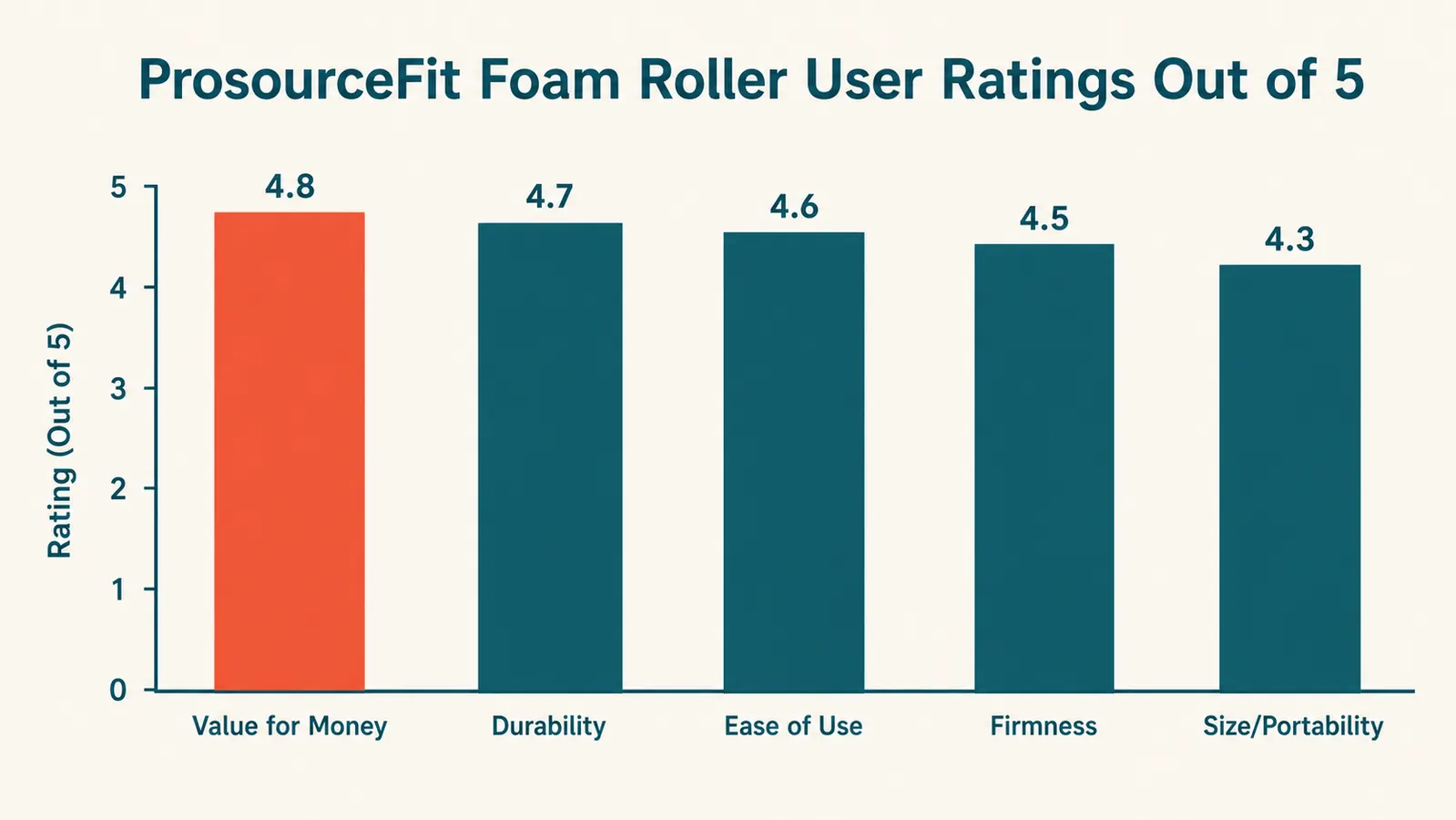
The ProsourceFit earns its rating through durability, density, and value. The Amazon reviews hover around 4.6, which reflects the fact that most buyers are not pushing it daily on heavy training schedules. For casual use a few times per week, this roller probably deserves a 4.7. My rating is slightly lower because of two factors that I consider real limitations rather than personal preferences.
First, the smooth surface does limit targeting precision. There is a ceiling to what smooth, cylindrical compression can accomplish on dense adhesions in smaller or deeper muscle groups. I have hit that ceiling. After you have been rolling consistently for a year or more, you start to notice the areas that do not fully release, and the smooth broad surface is part of why. A grid-textured roller like the Trigger Point GRID or a firm ball fills that gap.
Second, the lack of any end-of-roller grip or traction feature is a genuine design gap. Other rollers at similar or slightly higher price points have addressed this with rubber end caps or a slightly textured outer surface that does not migrate on hard floors. ProsourceFit has not addressed it, and that is a choice they have made across multiple product versions. It is a solvable problem and they have not solved it.
What I Liked
- High-density foam holds its shape under significant body weight without compressing
- Outlasts budget EPE rollers by a wide margin under consistent use
- Smooth surface is appropriate for beginners and anyone with low myofascial tolerance
- 12-inch size works well for targeted quad, calf, adductor, and single-area lower-back work
- Price makes it low-risk enough to recommend without reservation for first-time buyers
- Handles up to 200-plus pounds without meaningful deformation during use
Where It Falls Short
- Smooth surface limits precision on smaller muscle groups and dense adhesions
- 12-inch length requires repositioning for full thoracic or full quad work on taller users
- Slides on smooth surfaces when not in use and has no end-cap traction
- Produces a squeaking sound on hardwood or tile during use
- Experienced rollers will eventually want a textured surface for deeper targeting
Who This Is For
The ProsourceFit is the right first foam roller for anyone who has been using a soft or medium-density roller and is not getting results. If your current roller compresses noticeably when you put your full weight on it, you are working against the tool. Upgrading to this one will feel like a meaningful step forward. It is also the right call for runners who need targeted post-run quad and calf work and want something they can take to races in a drop bag. It fits in most gym bags, costs less than a race entry fee, and does the job it is supposed to do.
Who Should Skip It
Skip the 12-inch ProsourceFit if your primary goal is full thoracic spine work. You need a longer roller for that and repositioning every 30 seconds breaks the flow enough to make the session less effective. Skip it if you have been rolling for two or more years and you are already working with a medium-density textured roller. The smooth surface will feel like a downgrade in targeting, not an upgrade. Skip it if you need something that stays put on a polished concrete or hardwood floor, because it does not. And skip it if you are hoping a foam roller alone is going to fix a structural problem like a disc issue or nerve impingement. No roller does that. If your pain has a medical origin, the right next step is a physical therapist, not a firmer cylinder.
If your current roller sinks when you put weight on it, this one will feel like a completely different tool.
The ProsourceFit high-density roller is built from the material that does not fail after four months. Worth checking the current price before you spend three times as much on a textured version you may not need yet.
Amazon Check Today's Price on Amazon →