
I spent years foam rolling the wrong way. I'd put the roller under my quads, do ten lazy passes, and wonder why my legs still felt like concrete the next morning. Then I started paying attention to what actually worked, and the difference was not which roller I bought but whether I was using any technique at all. The ProsourceFit High Density Foam Roller I've had for 18 months has become the most-used piece of recovery gear in my garage. High density means it does not collapse under body weight, so you actually get pressure where you need it. But the tool is only half the equation.
These 10 techniques are the ones that made a real difference for me as a 40-something who lifts four days a week and runs trails on weekends. Each one targets a specific tissue, a specific problem. No filler.
Tight legs after every leg day? The ProsourceFit is the roller that holds its shape when you actually put weight on it.
High density foam, firm enough to reach deep tissue. Budget-friendly and one of the most-used tools in my gym.
Amazon Check Today's Price on Amazon →Thoracic Spine Extension
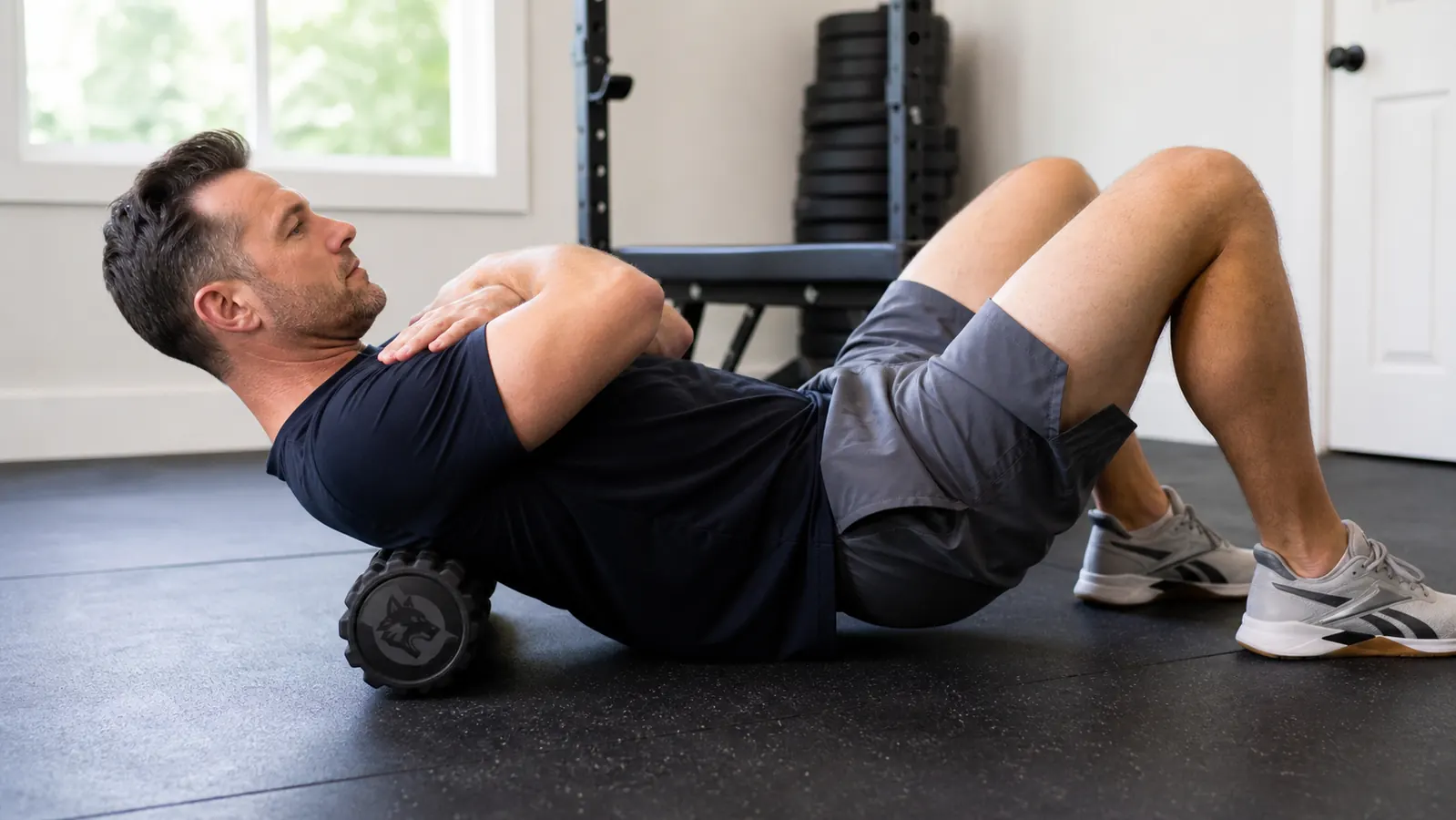
Sit on the floor with the roller perpendicular to your spine, about mid-back. Cross your arms over your chest, lean back slowly, and let your upper back drape over the roller. Hold for 5 seconds, then shift an inch up the spine and repeat. Five or six positions from shoulder blade height down to the bottom of your ribs covers the full thoracic section. This is the single biggest unlock I found for upper back stiffness from heavy pressing days. Most people are frozen through T4-T8 and do not know it. Do this before any overhead or rowing work and notice how much freer your shoulder blades feel. The ProsourceFit's firm high-density core means it does not squish flat under your body weight, which is exactly what you need here.
IT Band Slow Pass With Pin-and-Stretch
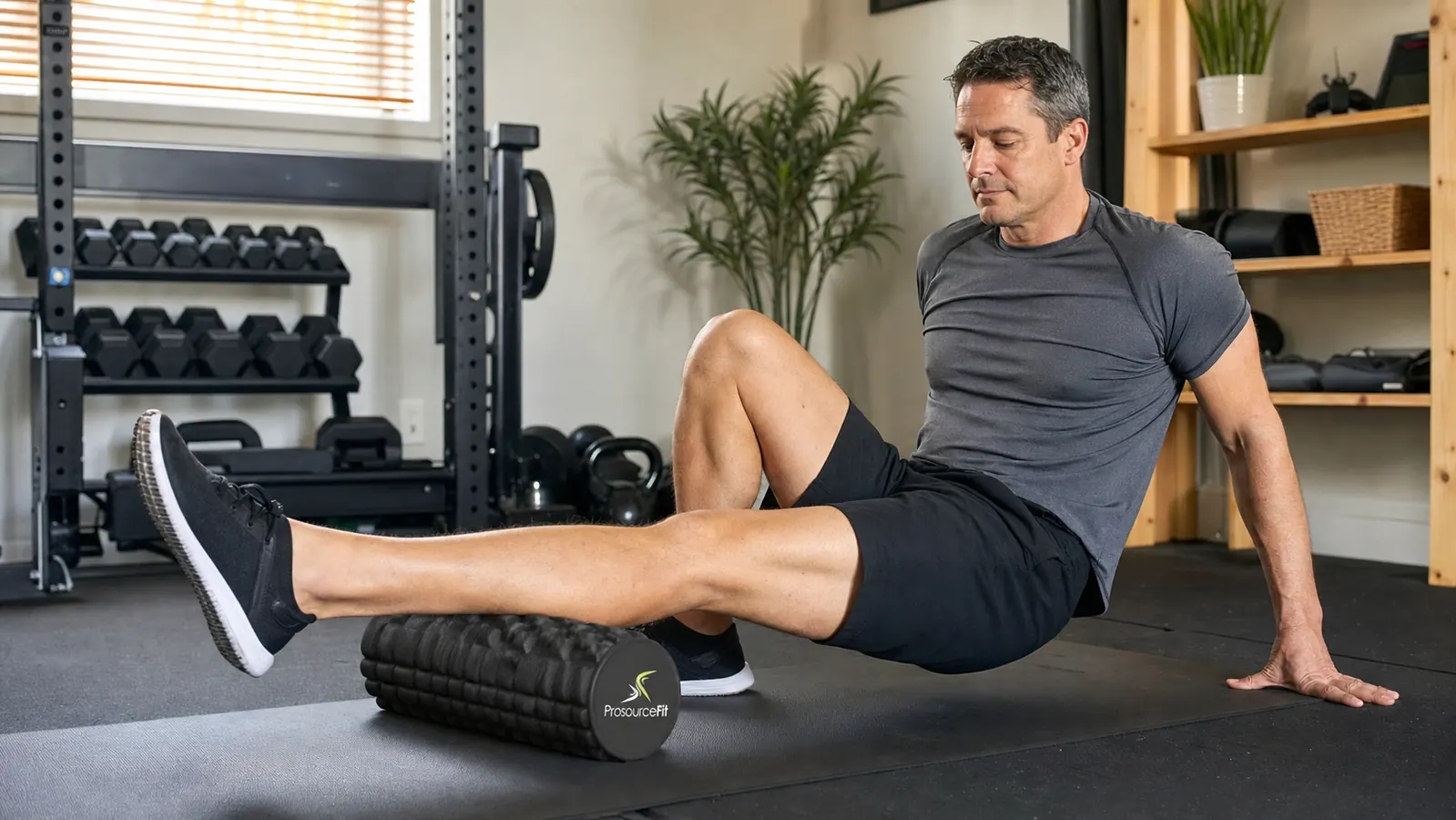
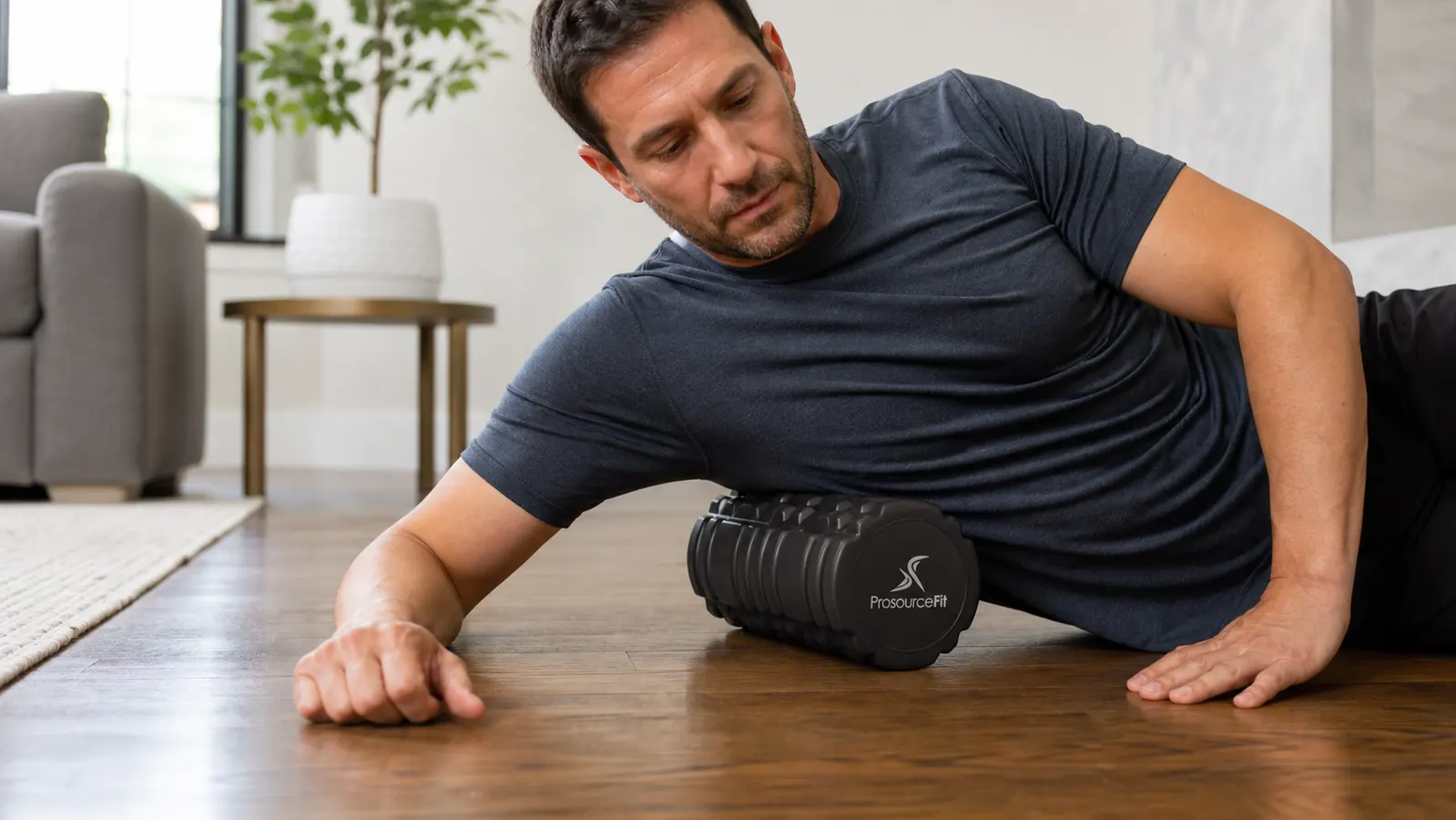
Lie on your side with the roller under your outer thigh, just below the hip. Move slowly, about one inch per second, from hip to just above the knee. When you hit a tender spot, stop. Do not roll through it. Instead, flex and extend your knee three or four times while holding that position. That pin-and-stretch movement releases the tissue far better than mindless back-and-forth rolling. The IT band itself does not stretch much, but the tissue surrounding the lateral quad and the TFL up near the hip responds well to this. If you have tight IT bands, this technique is non-negotiable.
Quad Rollout With Hip Internal Rotation
Lie face down with the roller under one thigh, just above the knee. Prop yourself on your forearms. Now, as you roll slowly toward your hip, rotate your leg inward so your toes point toward the floor, then outward so they point to the ceiling. Alternating this rotation while you move up the quad hits the full cross-section of the quadriceps rather than just the front-facing surface. Two minutes per leg the night before a run has cut my next-morning quad stiffness noticeably, maybe a 3 out of 10 instead of a 6.
Lat Sweep From Armpit to Mid-Back
Lie on your side with one arm extended above your head and the roller tucked under your armpit, right against the edge of your shoulder blade. Reach your top arm across your body to create a small amount of rotation. Roll slowly from under the armpit to mid-rib level, pausing where you find restriction. Heavy pulling days, lat pulldowns, and rope climbing all compress the lats and serratus. This technique reaches tissue that a lacrosse ball misses and that most people never address. It takes about 90 seconds per side and the payoff in shoulder mobility is real.
Glute Figure-4 Roll
Sit on the roller and cross your right ankle over your left knee in a figure-4 shape. Lean toward the crossed leg until you feel your right glute engage against the roller. Now make small circles and tilts, shifting your body to find the dense spots in your glute medius and piriformis. This is not fast rolling. It is slow, targeted pressure. Glute activation problems on your next squat day often trace back to accumulated tightness here. Two minutes per side, paying special attention to the spot an inch above your sit bone.
Calf Compression Stack
Sit on the floor with the roller under both calves and your hands behind you for support. Lift your hips so your body weight presses the calves down onto the roller. Hold for 20 seconds. Then cross one ankle over the other to double the load on one calf. Hold again. Then slowly rotate the calf inward and outward to vary the angle. Most foam rolling tutorials tell you to roll back and forth rapidly on your calves but this static compression approach is more effective for the dense gastrocnemius tissue. After a long trail run, this is the first thing I do when I get home.
Hip Flexor Long Pass
Lie face down and place the roller just below one hip bone, in the soft tissue between the hip and the quad. This is your hip flexor, specifically the psoas attachment. Keep the pressure light at first. This area can be very sensitive if you sit for work and then train. Roll slowly from just below the hip to about three inches down the thigh. Avoid rolling over the hip bone itself. A long day at the desk before a deadlift session is enough to lock this area up. One minute per side before squats or deadlifts improved my hip drive noticeably within two weeks of consistent work.
Hamstring With Alternating Knee Flex
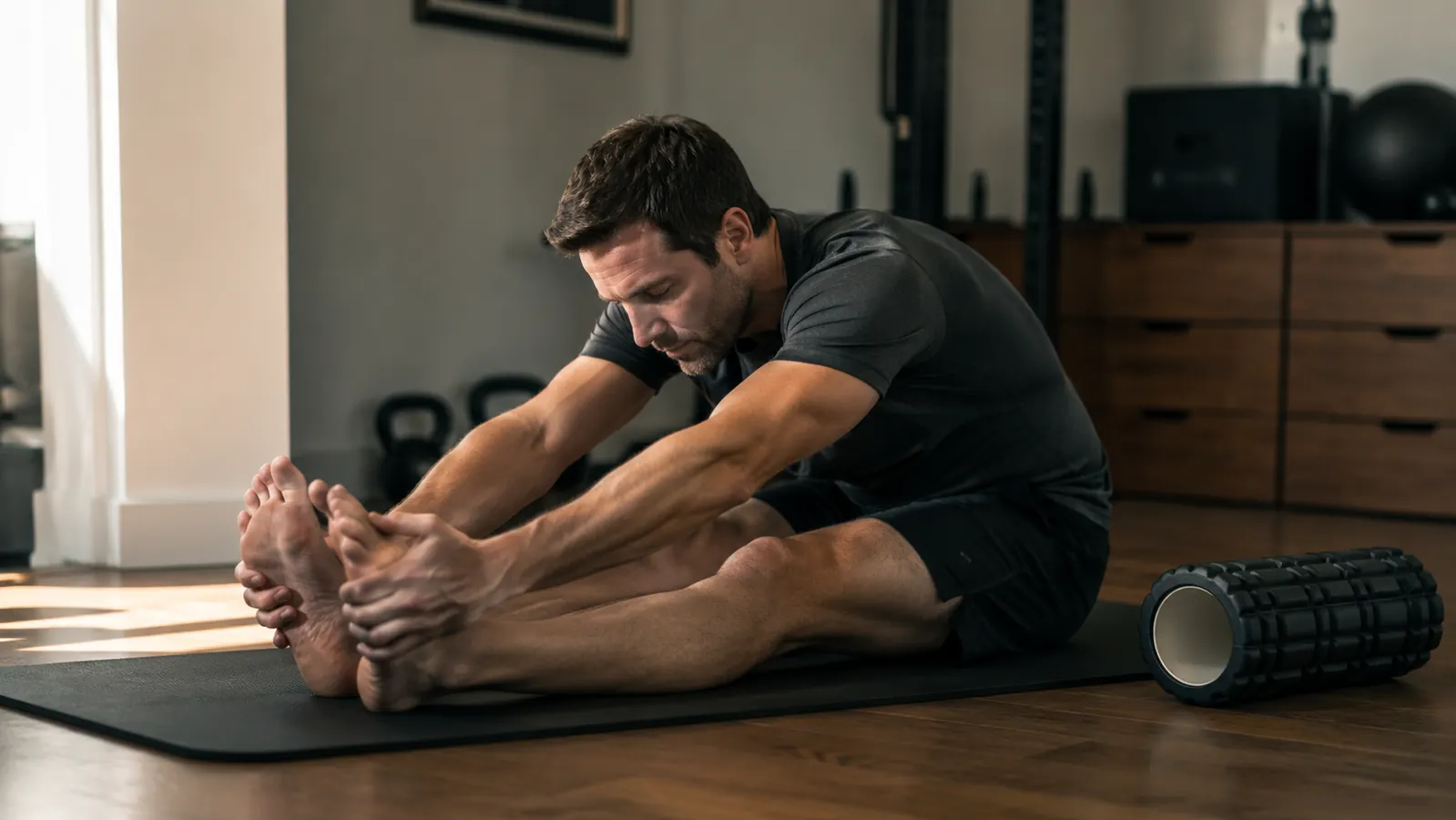
Sit on the floor with the roller under one hamstring, about mid-thigh. Support yourself on your hands. Now, alternating slowly, extend your knee fully and then bend it back to 90 degrees while the tissue sits against the roller. Move the roller one inch up toward your glute, and repeat. This active flexion-extension while loaded on the roller gets blood moving and loosens the hamstring much faster than passive rolling. Three passes up the length of the hamstring, about 90 seconds per leg, and the back-of-leg tightness that ruins your next squat session is significantly reduced.
Upper Trap and Neck Base Roll
Lie on your back and position the roller at the base of your skull, just below the occipital ridge. Let your head relax into it. Do not roll up onto the skull. Slowly turn your head left and right, about 30 degrees each way, while the tissue at the top of the traps and the suboccipitals decompresses against the roller. Heavy pressing, pulling, and any amount of screen time tightens this area. Ten slow head rotations per side, two to three minutes total. I do this at night before bed and sleep noticeably better on nights I remember to include it.
Full Spine Reset (The Finish Move)
End every foam rolling session with this: lie on your back and position the roller lengthwise along your spine, from tailbone to the back of your head. Your spine is balanced on the roller like a plank on a log. Let your arms fall out to your sides at 45 degrees, palms up. Breathe slowly for 60 to 90 seconds. This decompresses every segment of the spine simultaneously, opens the chest, and signals your nervous system to shift out of a compressed, protective posture. It sounds passive but after a heavy training day or a long drive to a race, it is one of the most effective things you can do. The ProsourceFit's 12-inch length is exactly right for this, long enough to support most of the spine without tipping.
What I'd Skip
Rolling your lower lumbar spine directly. The lumbar vertebrae are not meant to be mobilized the way thoracic vertebrae are. If your lower back is tight, the fix is usually in your hips and thoracic spine. Roll those instead and the lumbar stiffness often clears on its own. Also skip the super-fast, aggressive rolling you see in gym videos. Speed is not the point. Slow, deliberate pressure with pauses at restriction points does more work in less time than ten minutes of mindless back-and-forth.
Slow, deliberate pressure with a two-second pause at the tight spot does more in 90 seconds than ten minutes of rolling back and forth like you are trying to start a fire.
The ProsourceFit stays firm under real body weight, which is the only thing that makes these techniques actually work.
Soft rollers collapse the moment you load them. The ProsourceFit high-density core holds shape for all 10 of these techniques and then some. It is also one of the most affordable options that does not cut corners on density.
Amazon Check Today's Price on Amazon →