
I have a bad habit of buying recovery gear I use twice and then donate. The foam roller graveyard in my garage proves it: a mid-priced textured roller that went soft in three months, a vibrating one I charged twice, a travel-sized half-roller that was never the right size for anything. So when I grabbed the ProsourceFit high-density foam roller off Amazon for cheap, I expected it to join the pile. Eighteen months later, it is still sitting at the end of my lifting mat getting used almost every training day. That surprised me enough to write about it.
My setup: I train five days a week out of a home garage gym, mostly powerlifting-adjacent work, squats, deadlifts, pressing, with trail runs mixed in two or three times a week. I am 43, 195 pounds. My problem areas are a chronically tight IT band on the left side, upper back stiffness from years of desk work, and hip flexors that lock up after long runs. I started using this roller specifically for post-leg-day IT band work and thoracic spine extension. That is where most of my 18 months of data comes from.
The Quick Verdict
Punches well above its price. Firm enough to actually do something, durable enough to last, and honest enough that I cannot pretend its limitations do not exist.
Amazon Check Today's Price →Sore after every session and tired of rollers that go soft?
The ProsourceFit high-density roller costs less than a protein shake six-pack and has outlasted every fancy gadget in my recovery drawer. Worth checking today's price before you spend more than you need to.
Amazon Check Today's Price on Amazon →How I Have Used It Over 18 Months
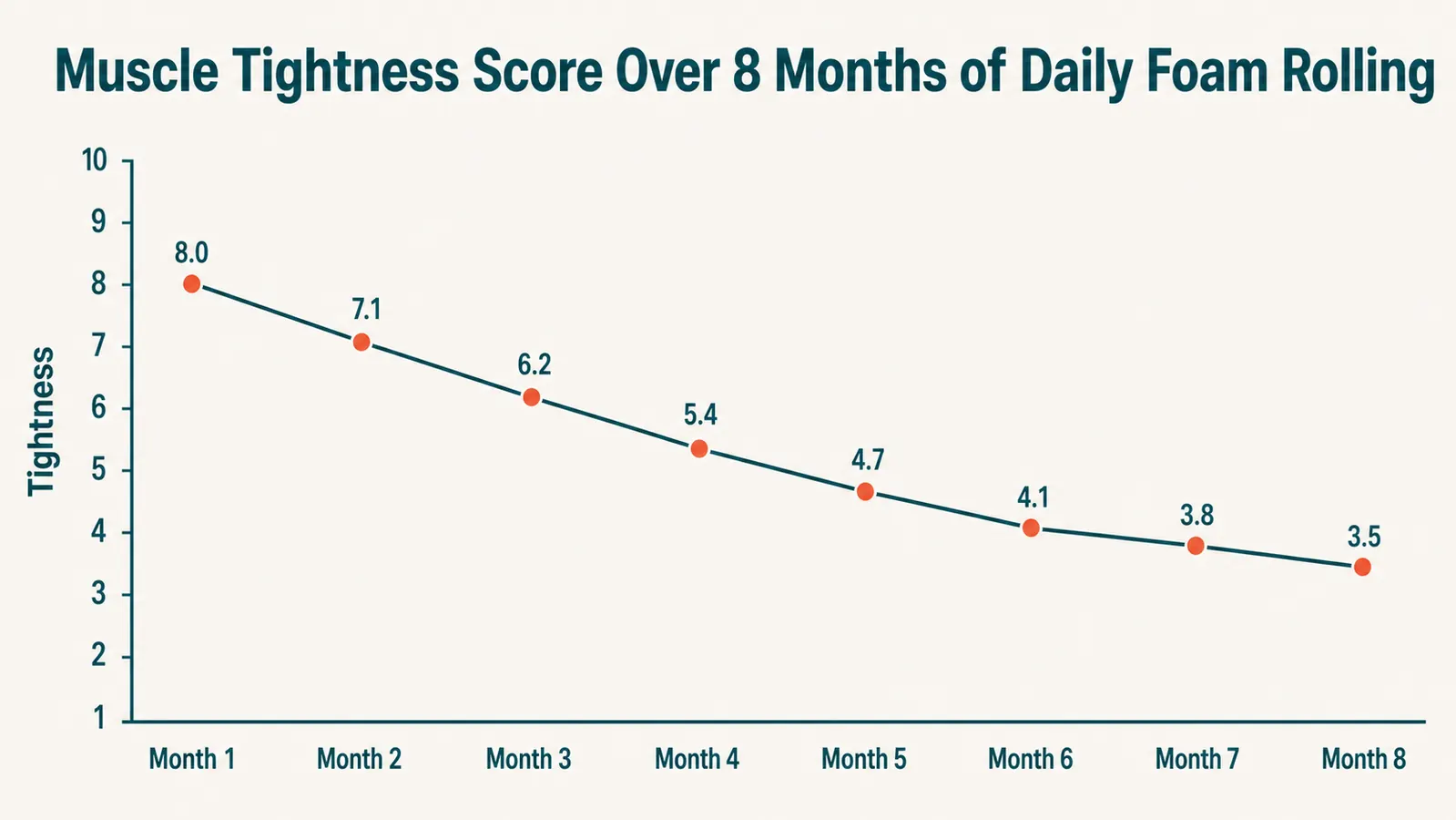
The first few weeks were almost daily IT band sessions, rolling slow from just above the knee up to the hip pocket, pausing on anything that screamed, letting the pressure sink in. I was coming off a half-marathon training block where I had completely neglected mobility work, and my left leg was paying for it. Soreness rating after long runs was sitting around a 7 out of 10 by the following morning. After adding ten minutes of targeted rolling with this thing, that number dropped to a 4 or 5 within two weeks. Not a cure, not magic. But real and repeatable.
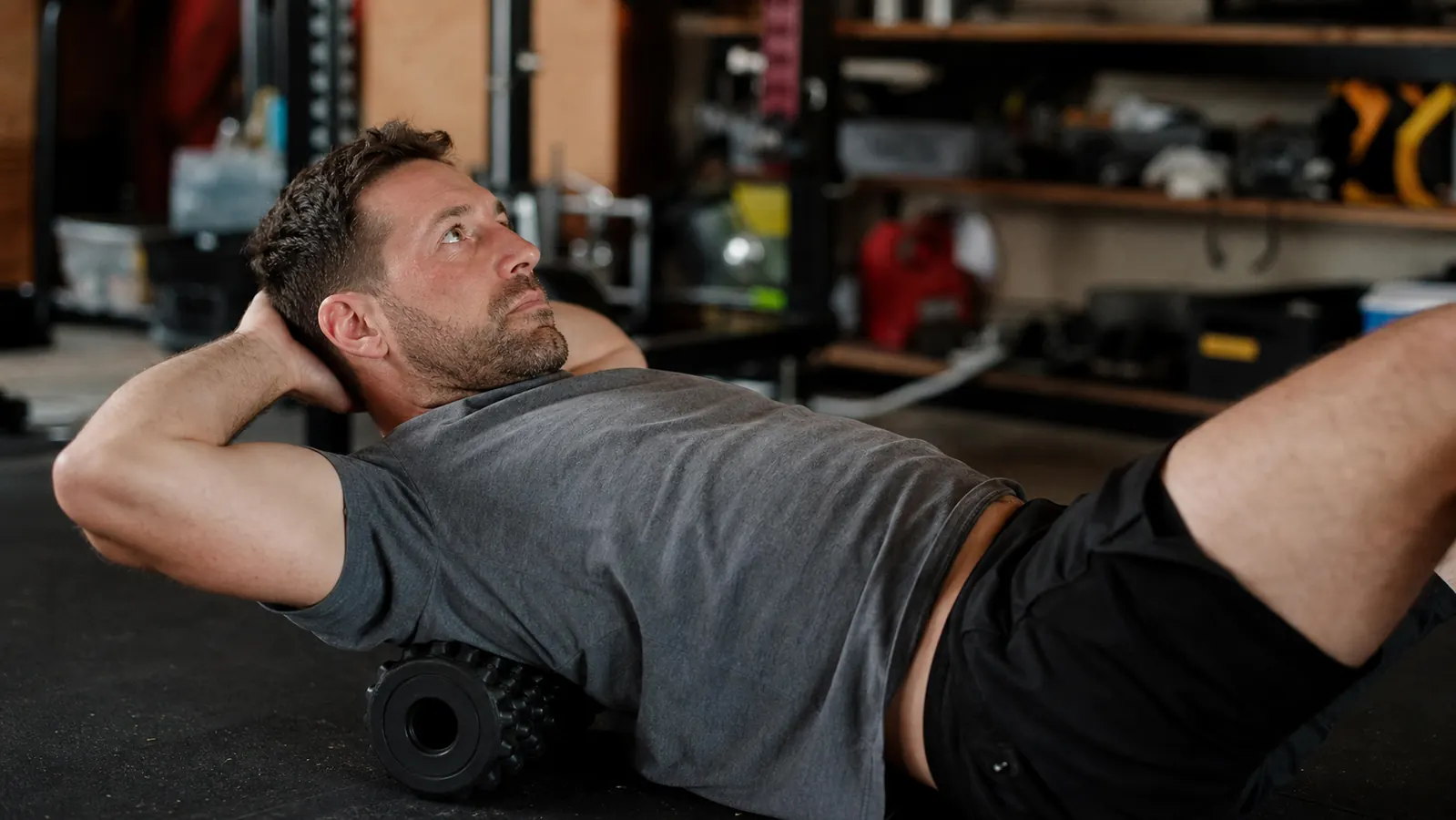
Over the next few months I added thoracic extension work. You lay the roller perpendicular to your spine, find a stiff segment, and let gravity do the rest. This is where a dense roller earns its keep. Soft rollers compress under body weight and you never get the contact you need. The ProsourceFit held firm. My upper back unlocked in ways that three months of band pull-aparts had not managed. By month six it was part of every warm-up and cool-down, not just an injury-response tool.
By month twelve I started using it under my calves after long runs and on my adductors after squat sessions. I also gave it to my wife to try after her yoga classes. She uses it on her thoracic spine and lats now. So in terms of actual session count, this roller has probably seen well over 400 uses. And it looks almost the same as it did when it arrived.
Density and Durability: The Numbers That Actually Matter
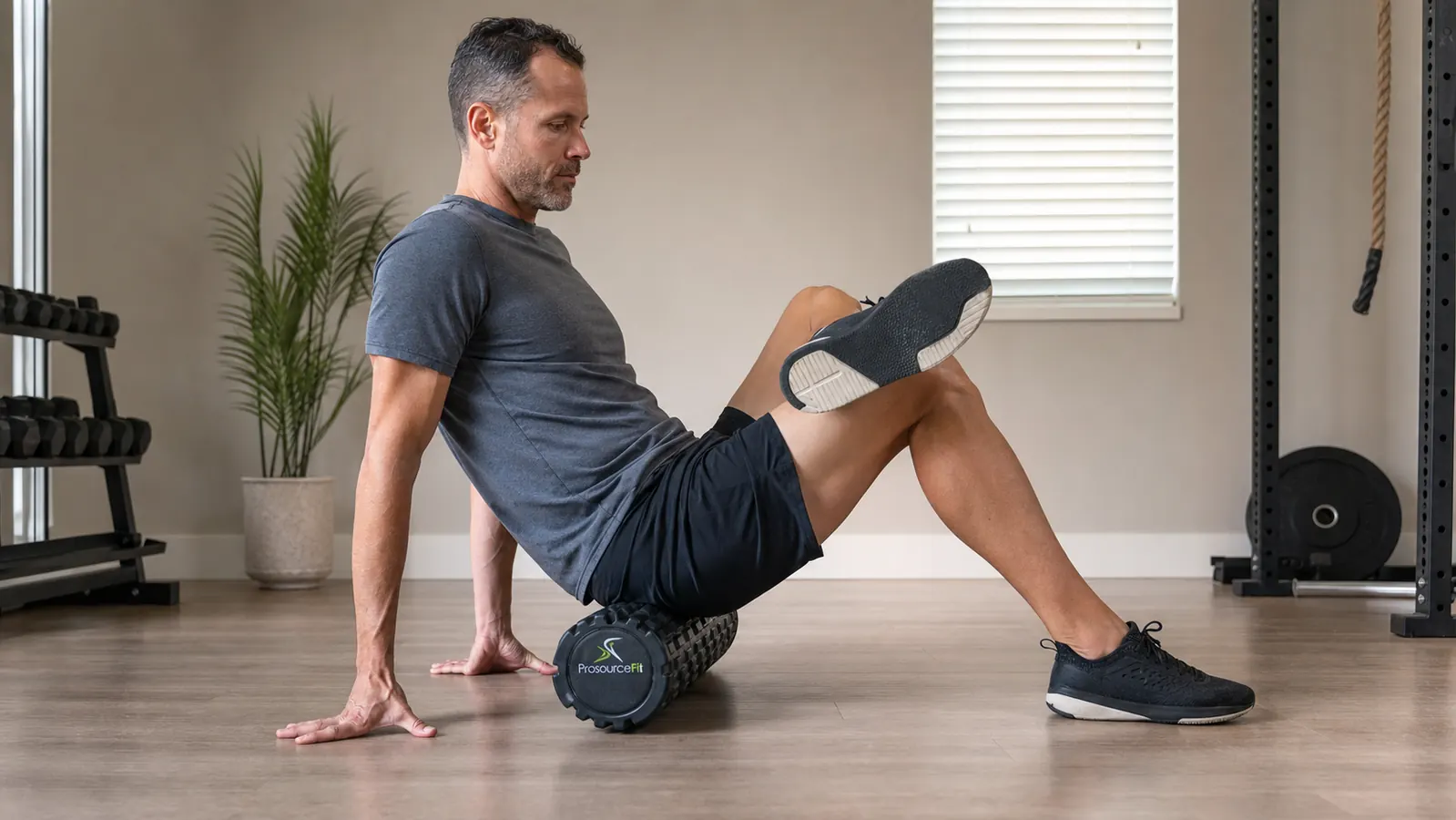
The ProsourceFit is marketed as high-density, and it backs that up. I cannot give you a hardness measurement in Shore A because I do not own a durometer, but here is a real-world comparison: I still have a bargain-brand white roller I bought years ago. When I put 190 pounds of body weight on both rollers, the cheap one deforms by what I estimate is close to 30 percent of its original diameter. The ProsourceFit barely moves. That contact area difference is the difference between feeling a stretch and actually getting into the tissue.
After 18 months of daily use, I expected to see some flattening or denting on the areas I hit most. There is none. The surface texture has worn ever so slightly smoother, which is honestly fine. It still grips the mat and does not slide around. The foam has not cracked, split, or developed soft spots. For a budget product, that longevity is legitimately impressive. I have seen premium textured rollers fall apart faster.
What It Does Well (and Where the Limits Are)
It excels at large muscle group work: quads, hamstrings, IT band, thoracic spine, lats, calves. These are surfaces where you want sustained, firm pressure over a broad area. The smooth 12-inch cylinder is exactly right for that application. It is also genuinely versatile for balance and mobility drills. I use it for thoracic extension, passive shoulder opening drills, and the occasional core stability exercise. A budget roller that also functions as a balance-training prop is a decent deal.
Where it cannot compete is in targeted precision work. Tight piriformis, suboccipital muscles, pec minor, the deep hip flexors. For those spots you need something smaller and firmer, like a lacrosse ball. The 12-inch length also limits its use as a travel tool. It fits in a large duffel but it is not going in a carry-on. If you train frequently in hotel gyms or on the road, you might want a 24-inch version for home and a smaller tool for travel.
One genuine knock: this roller comes in black, blue, and purple, but there is no texture variation on the surface. Smooth works, and I prefer it for beginners because aggressive grid patterns can cause localized bruising if you have not built up myofascial tolerance. But if you have been rolling for years and want a more aggressive bite into the tissue, you will hit a ceiling here. That is the one moment when spending more on a textured option like the Trigger Point GRID makes sense.
The Honest Comparison: Budget Rollers vs. This One
I have used three cheap foam rollers before this one. All three went soft within six months of regular use. Two developed a dead spot where I repeatedly hit the same area. One cracked along the seam. The pattern is consistent: cheap EPE foam looks the same as high-density EVA foam on day one, and then diverges quickly. ProsourceFit uses the denser foam, which is why 18 months later I am writing a review instead of a eulogy.
The next logical comparison is the Trigger Point GRID, which runs in the mid-to-upper range depending on the size. The GRID has real advantages: a hollow core that provides firmer feedback, a textured surface with varying grid patterns for targeting different tissue depths, and a size range that goes up to 26 inches. If you are an experienced roller who wants targeted, aggressive work and you are okay spending three times more, the GRID earns its price. But for most people doing general post-workout maintenance, the ProsourceFit does 85 percent of what the GRID does at 30 percent of the cost. That math works out most days.
Eighteen months of nearly daily use and it looks almost identical to the day it arrived. I have paid three times more for rollers that lasted three months.
Recovery Results I Can Actually Point To
I am not going to tell you foam rolling is scientifically proven to reduce DOMS. The research is genuinely mixed. What I can tell you is what I observed in my own training over 18 months. My post-leg-day soreness on a subjective 1-to-10 scale averaged around 6 or 7 before I added consistent rolling. After six weeks of post-session rolling on quads and IT bands, it dropped to a 4 or 5. I also noticed I was hitting my next session feeling more mobile, particularly in hip flexion depth on squats. None of this proves causation, but the pattern was consistent and repeatable every time I skipped rolling for a week.
Sleep quality felt slightly better on nights I rolled before bed, which might be placebo, might be the parasympathetic nervous system response to slow, deliberate pressure work, might be a coincidence. I am not making a claim there. What I am confident in: regular use reduced my subjective perception of soreness and helped me feel less locked up going into subsequent training sessions. For a minimal investment, that is more ROI than most recovery gear I have tried.
What I Liked
- Genuinely high-density foam that holds its shape after hundreds of uses
- Firm enough for real myofascial pressure, unlike cheap EPE alternatives
- Versatile for large muscle groups, thoracic extension, and balance drills
- 12-inch size is manageable for home storage without being too small to use
- Outstanding durability for the price point after 18 months of daily use
- Works well for beginners who have not built up tissue tolerance yet
Where It Falls Short
- Smooth surface limits precision targeting on small, deep muscles
- No texture variation means experienced rollers will eventually want more
- 12-inch length is not ideal for full-length quad or thoracic sessions without repositioning
- Not a travel tool unless you are packing a large bag
Who This Is For
This roller is a strong match if you are new to foam rolling and want a tool that actually works without committing to a premium entry point. It is also the right call if you are a regular lifter or runner who needs daily IT band, quad, or thoracic maintenance and wants something that will survive consistent use. If you already own a decent roller and are researching an upgrade, the Trigger Point GRID is worth a look at the difference in cost. But if you are starting from scratch or replacing a soft, dead budget roller, start here. You are unlikely to outgrow it in the first year, and by the time you do, you will know exactly what your rolling practice needs next.
Who Should Skip It
Skip the ProsourceFit if you are a deep-tissue veteran who wants aggressive grid texture for targeted fascial work. The smooth surface will feel underwhelming and you will not get the contact precision that textured rollers provide on smaller adhesions. Also skip it if you specifically need a long roller, 24 to 36 inches, for full-length thoracic or quad work without repositioning. And skip the 12-inch if you know you need something that fits in a carry-on. In those three scenarios, there are better fits for your money. For everyone else, this is the sensible first choice.
Still using a roller that goes flat under 190 pounds? This one does not.
The ProsourceFit high-density foam roller has been in my garage gym rotation for 18 months with zero degradation. At current pricing it is one of the lowest-risk purchases in any recovery toolkit.
Amazon Check Today's Price on Amazon →