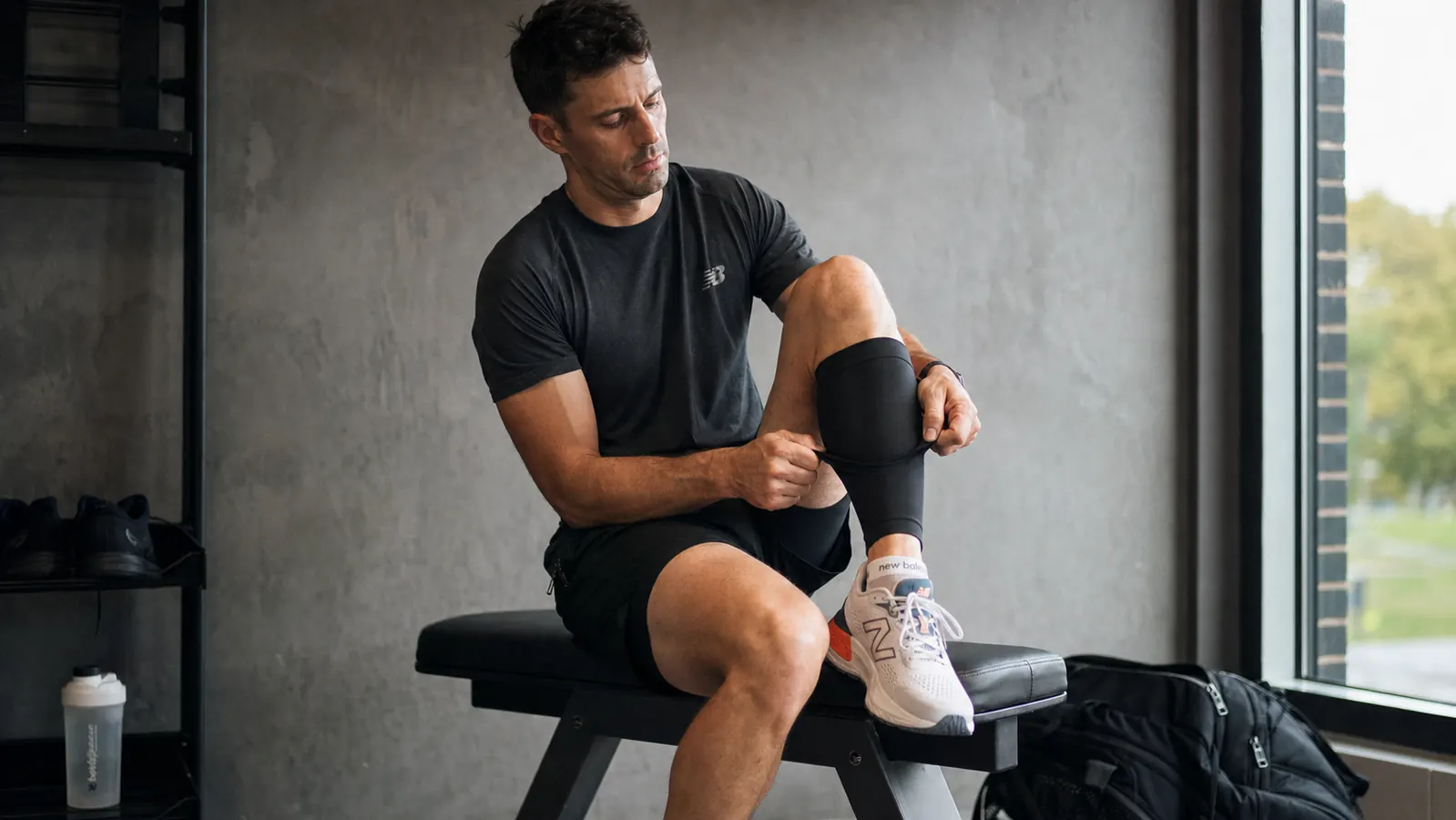
Shin splints turned a 14-mile training week into a walk-only week for me back in the spring of 2022. The pain started as a dull ache along the front of my left tibia after a back-to-back trail run and track workout. By Thursday I could not run a mile without stopping. I tried rest, ice, and stretching in every order imaginable. What I had not tried was compression, and when I finally put on a pair of BLITZU calf compression sleeves before a slow 3-miler, I noticed something was different. Not fixed, not a cure, but different enough to keep going and to start paying close attention to how I was using them.
Compression sleeves are not complicated, but most people wear them wrong. They buy a pair, pull them on when the pain is already screaming, and expect instant relief. That is not how they work. The sleeve is a tool for managing blood flow, reducing inflammation-driven swelling, and dampening the vibration that beats up your lower leg muscles on every footstrike. To get any of those benefits, you have to get the sizing right, understand when to wear it, and combine it with the other things your shins actually need. That is what this guide covers, step by step.
Your shins are not going to wait for you to figure this out on your own.
The BLITZU Calf Compression Sleeve is rated 20-30 mmHg, fits true to calf circumference, and washes without losing its compression. It is the sleeve I wear on every run where my shins are still in the rebuilding phase.
Amazon Check Today's Price on Amazon →Step 1: Get Your Size Right Before You Do Anything Else
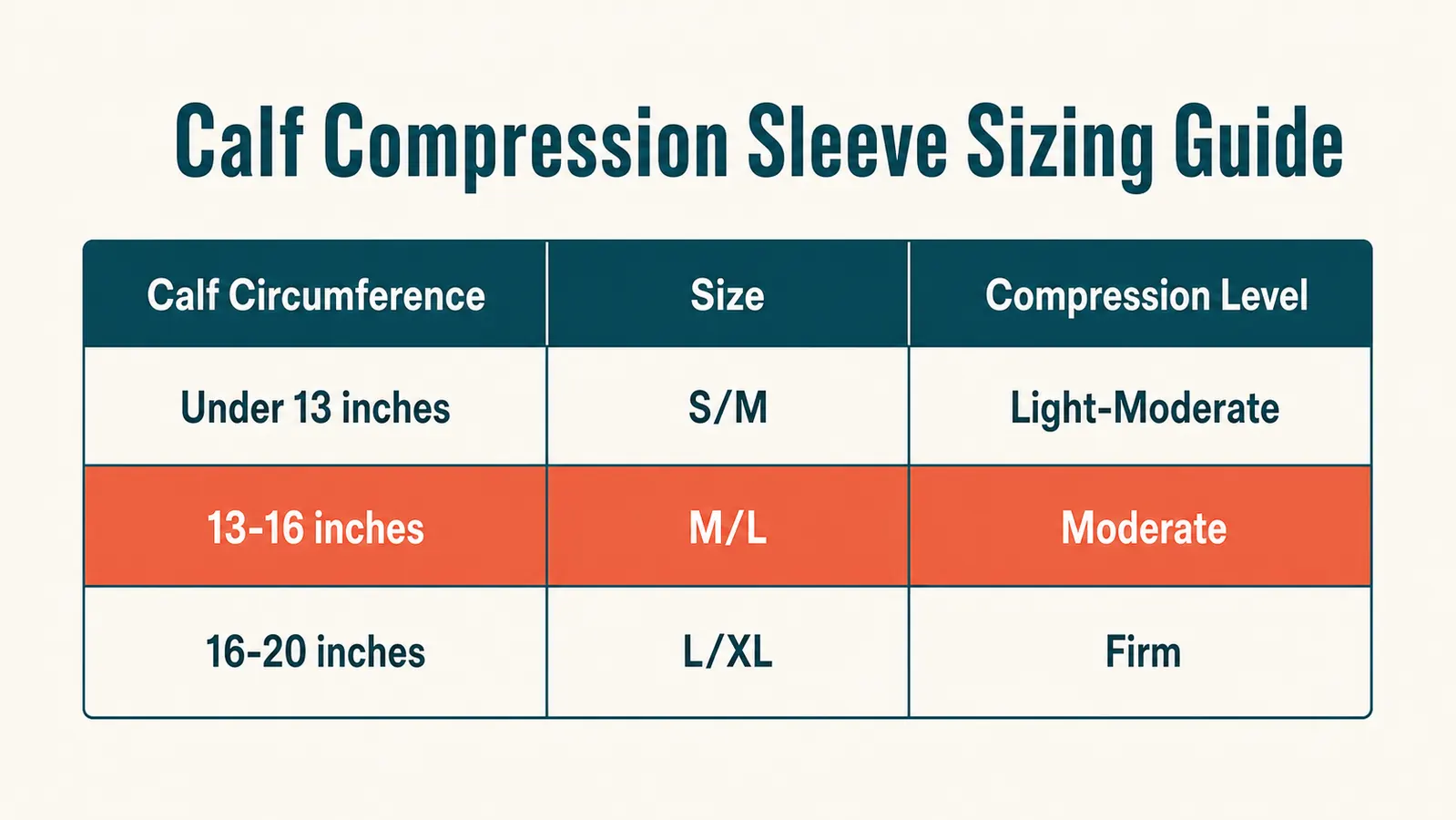
A compression sleeve that is too loose is just a tube of fabric. A sleeve that is too tight cuts off circulation and makes the pain worse. Most people pick size by shoe size or general body size, which is the wrong approach. Calf compression sleeves size by calf circumference, full stop. Grab a soft measuring tape, find the widest part of your calf (usually 3 to 4 inches below the back of your knee), and measure in inches or centimeters. Write the number down.
The BLITZU sleeve runs in four sizes: XS-S, M-L, XL-XXL, and XXXL. Their size guide corresponds to calf circumference in inches. I measure at 15 inches and wear M-L, which gives me firm compression without any numbness or pinching. If you are right on the border between two sizes, go up. A slightly looser fit is safer with shin splints than one that restricts blood flow at the top edge of the sleeve. The top band sits below the knee, and you want it snug but not leaving a red line on your skin after 20 minutes.
Also check the sleeve's coverage zone before you buy. Most calf sleeves cover from just below the knee to just above the ankle, which is exactly where shin splint pain lives. Avoid ankle-cut sleeves that only cover the lower third of the calf. You want that tibial area wrapped.

Step 2: Understand What 20-30 mmHg Actually Means
mmHg stands for millimeters of mercury, the same unit used for blood pressure. Compression garments come in ranges: 8-15 mmHg is light and mostly cosmetic. 15-20 mmHg is moderate, good for long travel days or mild edema. 20-30 mmHg is the medical-grade range, what nurses and post-surgery patients wear, and the range that actually moves the needle on athletic recovery. The BLITZU sleeve is rated 20-30 mmHg, which is what I recommend for active shin splint management.
At this pressure level, the sleeve is doing real work. It applies graduated compression, meaning it is tightest at the ankle end and gradually eases as it moves up the calf. This gradient pushes blood and lymphatic fluid upward, away from the inflamed area along your tibia. That is why wearing a single non-graduated tube sock does not accomplish the same thing. The direction and variation of the pressure is where the benefit lives.
One note: 30-40 mmHg exists, and it is not for athletic use. That range is for deep vein thrombosis and post-surgical swelling under a doctor's supervision. For shin splints, 20-30 mmHg is the ceiling. Going higher will not help you heal faster and may cause discomfort at the top band.
A sleeve that is too tight cuts off circulation and makes the pain worse. Get the calf circumference right before you get anything else right.
Step 3: Put the Sleeve On Before the Pain Peaks, Not After
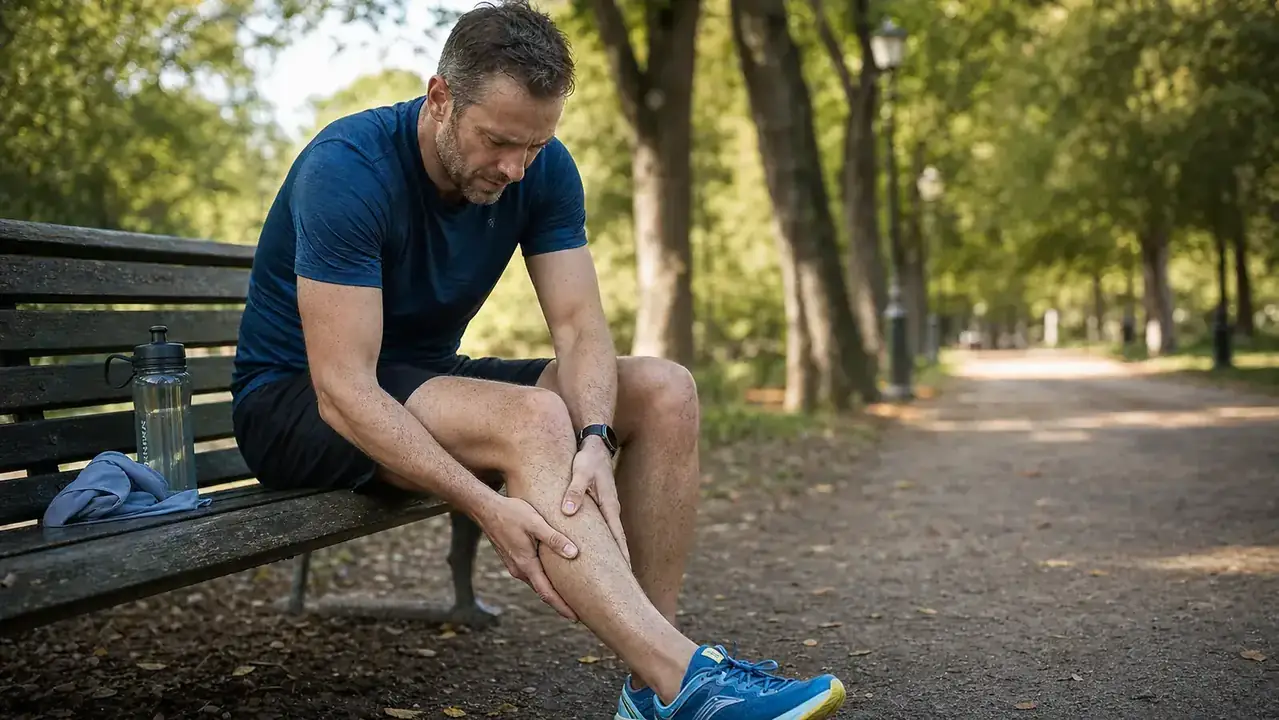
Here is the mistake I made for the first two weeks: I would run without the sleeve, feel the pain coming on around mile 2, stop and stretch, then put the sleeve on when I got home. By then the inflammation was already rolling. The sleeve helped a little, but I was chasing the problem instead of staying ahead of it.
The right time to put on a calf compression sleeve for shin splints is before activity, ideally 10 to 15 minutes before you start moving. Putting it on before your warm-up lets the compression do its job during the period when your shins are still cold and most vulnerable to that initial impact stress. Think of it as a pre-brace rather than an ice pack. The sleeve is preventing accumulation, not undoing it.
For non-running days, I wear mine in the early morning during the first hour of the day, when tibial soreness tends to be sharpest from overnight stiffness. If you are on your feet all day at work, wearing it through a long shift is also legitimate. The BLITZU sleeve is thin enough to fit under most athletic pants and pants with a slimmer cut.
Step 4: Know How Long to Wear It and When to Take It Off
For active running sessions: wear the sleeve from before your warm-up through the end of your cooldown. If you are doing a 30-minute easy run with a 10-minute warm-up and cooldown, that is 50 minutes total. That is appropriate. Do not take the sleeve off mid-run expecting to feel different. The compression builds a small effect over time. Pulling it off partway through and then putting it back on does not give you additional benefit.
For recovery use after a run: keep the sleeve on for 1 to 2 hours post-activity while you are moving around, doing light tasks, or elevating your legs. The post-run window is when your shins are most inflamed and when graduated compression does the most to clear metabolic waste. After 2 hours the benefit plateaus and you can take it off.
Do not sleep in your compression sleeve. This is a common mistake. When you are horizontal and not moving, the graduated compression is working against your natural circulation rather than with it. Daytime use only, and no more than 4 to 6 consecutive hours in a single stretch. If you are wearing it all day at work, take a 20-minute break mid-day and let your legs breathe.
Washing cadence matters too. A wet, stretched-out sleeve loses compression. Wash the BLITZU after every 2 to 3 uses in cool water, air dry, and it will hold its rating for a long time. Machine drying kills the elastane. I rotate two pairs so one is always dry and ready.
Step 5: Combine the Sleeve With These Other Tactics to Actually Heal
Compression manages the symptoms. It does not fix the underlying cause of shin splints, which is usually a rapid increase in mileage or intensity, weak tibialis anterior muscles, or worn-out footwear. If you skip this step and only wear the sleeve, you will feel better during runs and keep digging the hole deeper.
Ice the tibial area for 15 minutes after every run while you are in the first two weeks of treatment. Use a bag of ice wrapped in a thin cloth, not an ice pack directly on skin. Apply it while you have the sleeve off during a post-run recovery session. If you have access to cold water immersion for the lower legs, 10 minutes at 55 to 60 degrees Fahrenheit is even better.
Reduce mileage by 30 to 50 percent for at least two weeks. I know that is painful to hear if you are mid-training block. But trying to run through shin splints at full volume while relying on a sleeve to mask the pain is how you go from shin splints to a stress fracture. Cut the volume, keep the intensity low, and let the bone and muscle adapt.
Add calf raises and tibialis raises to your warm-up. Three sets of 20 calf raises on a step, followed by three sets of 20 tibialis raises (toe lifts against resistance), three days per week. These build the muscle balance that prevents shin splints from coming back. I started this protocol in week two of my 2022 recovery and had zero recurrence in the following 18 months.
Check your shoes. If your running shoes have more than 400 miles on them, the midsole cushioning is gone, even if the outsole looks fine. That lost cushioning means more vibration reaching your tibia on every footstrike. A fresh pair of shoes combined with a compression sleeve is a much stronger combination than the sleeve alone.
What Else Helps Between Training Days
Compression sleeves are most effective when they are part of a broader recovery routine, not a standalone fix. On non-running days, I combine the sleeve with 10 minutes of foam rolling on the calves, peroneal muscles, and soleus. Rolling the calf does not directly treat the tibia, but releasing tension in the posterior compartment takes load off the tibialis anterior and reduces the pulling force that aggravates the periosteum.
I also elevate my legs for 20 minutes each evening during active shin splint flare-ups. Lying with legs propped against a wall at roughly 90 degrees drains fluid from the lower legs and reduces overnight stiffness. The difference in morning soreness between doing this and not doing this was noticeable within three days for me. Low-effort, zero cost, and it stacks directly with the post-run compression window.
If you want to go deeper on the science behind why compression sleeves actually help runners bounce back between sessions, I covered that in detail in the 10 reasons compression sleeves help runners recover faster piece. And if you want to know whether the BLITZU holds up over months of hard use, I broke down everything in the BLITZU calf compression sleeve long-term review.
Compression manages the symptoms. It does not fix the underlying cause. Run the full protocol, or you are just delaying the same conversation with your shins two weeks from now.
The BLITZU is not expensive. At today's price on Amazon it costs less than a single post-run protein shake and a foam roller session at a recovery studio. It is washable, it fits under training tights, and it does what the rating says when you size it correctly. For shin splint management during an active training block, it is the first thing I reach for and the last thing I take off after a hard day.
Ready to run through the pain smarter, not harder?
The BLITZU Calf Compression Sleeve is rated 20-30 mmHg, built for men and women, and sized by calf circumference so you actually get the compression you paid for. Over 24,000 runners have reviewed it on Amazon.
Amazon Check Today's Price on Amazon →