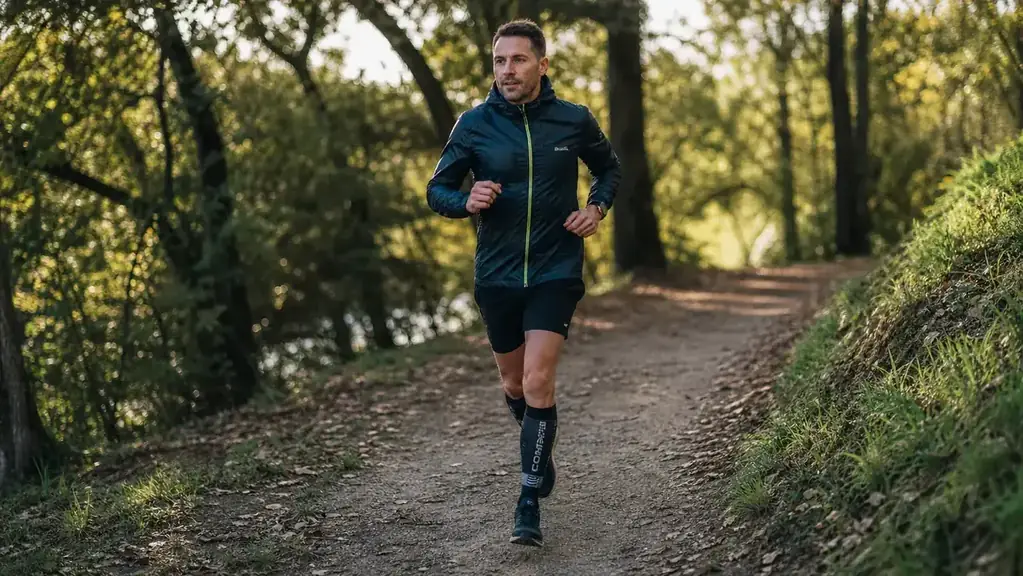
Last September I was three weeks out from a local half-marathon and my shins had been complaining since mile four of every run. Not sharp, bone-bruise pain, but that deep, throbbing soreness you feel about six inches above the ankle that ramps from a 3 to a 7 by the time you finish your cool-down. I had done everything the foam roller videos told me to do. I stretched, I iced, I dropped my weekly mileage. Nothing moved the needle. So at 11 PM on a Tuesday I went on Amazon and bought a pair of BLITZU calf compression sleeves for under fifteen dollars. My expectation was basically zero.
Six months later, I have logged over 300 miles in these sleeves, worn them through that half-marathon finish, through three separate leg-day cycles in the garage gym, and through one particularly rough week where I was running four days and squatting twice. This review covers what actually happened across all of that, not just the first two weeks when everything new feels great. You deserve the long-term picture, especially if you are dealing with recurring shin pain and wondering whether compression gear is worth trying or just another thing to spend money on before going back to doing nothing.
The Quick Verdict
A legitimate compression sleeve that earns its keep for runners managing shin splints or calf tightness. The 20-30mmHg rating holds after washing, the fit is accurate if you measure your calf correctly, and the price point makes it easy to own two pairs. The footless design is both its best and most polarizing feature.
Amazon Check Today's Price →Still dealing with shin pain every time your mileage goes up? This sleeve costs less than one PT co-pay.
The BLITZU calf compression sleeve has 4.5 stars across more than 24,000 reviews. Check the current price and sizing chart on Amazon before your next training block.
Amazon Check Today's Price on Amazon →How I Have Been Using These for Six Months
I run three to four days a week, mostly pavement with some crushed gravel trail mixed in. My weekly mileage peaked around 28 miles in the two weeks before the half-marathon and settled at 18-22 miles once I was back in maintenance. In the garage gym I squat twice a week, heavy-ish, 225 to 245 pounds at 185 bodyweight. Calves and shins take a beating from both sides of that schedule.
I wear the BLITZU sleeves every run day, putting them on about 15 minutes before I head out the door so they settle into position before the first footstrike. On heavy squat days I occasionally wear them during the session, mostly as a proprioception cue to keep my knees tracking right. After long runs I leave them on for 45 to 60 minutes of the cool-down walk and the first stretch session. That has been my consistent protocol across the full six months, which means these have been washed somewhere between 80 and 100 times. That matters more than anything else in determining whether compression gear is worth buying.
I bought a second pair at the three-month mark because I was washing the first pair mid-week and it was slowing down my routine. Running four days a week with one pair means you are either washing them more than once a week or wearing them damp, neither of which is great. Two pairs at a budget-friendly total is a practical solution and lets you compare wear across slightly different wash counts, which is what I have been doing since.
Fit and Sizing: Get the Measurement Right or You Will Be Disappointed
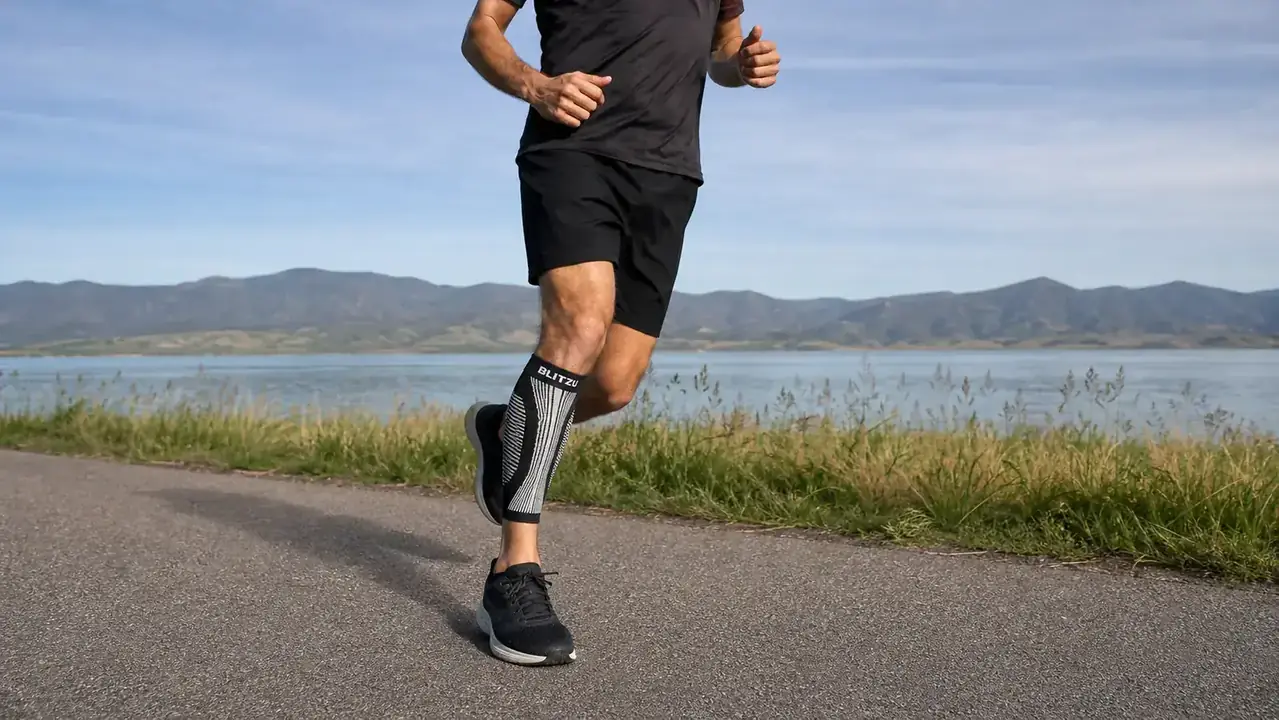
This is the most important thing I can tell you before you order: measure your calf circumference at the widest point before you pick a size. I am a 15.5-inch calf and ordered Medium on the first pair. That was correct for me. A buddy of mine who runs our local trail club ordered Large without measuring and complained the sleeve kept sliding down after mile three, bunching up around his lower shin and doing absolutely nothing useful for compression. He reordered in Medium after we compared notes, and the problem disappeared entirely. BLITZU publishes a sizing chart on the product page. Use it.
The sleeves run footless, which I initially thought I would hate. I have worn full compression socks in the past and always found the toe seam distracting on longer efforts, especially in warm weather. The footless design from BLITZU means you can wear whatever sock you want underneath, and the sleeve sits from just above the arch of your foot up to just below the knee. After two runs I stopped thinking about the footless aspect entirely. It is now a feature I would specifically look for if I were buying again.
The graduated compression rating is listed at 20-30mmHg. That sits in the therapeutic range, not just mild support territory. You feel it when you first pull them on, particularly if you are doing it early in the morning before the calf muscle has warmed up. It is snug but not restrictive. I have never had circulation issues, no pins and needles, no numbness in the foot. Those would be the red flags that a sleeve is too tight or the wrong size.
What the Compression Actually Did for My Shin Splints
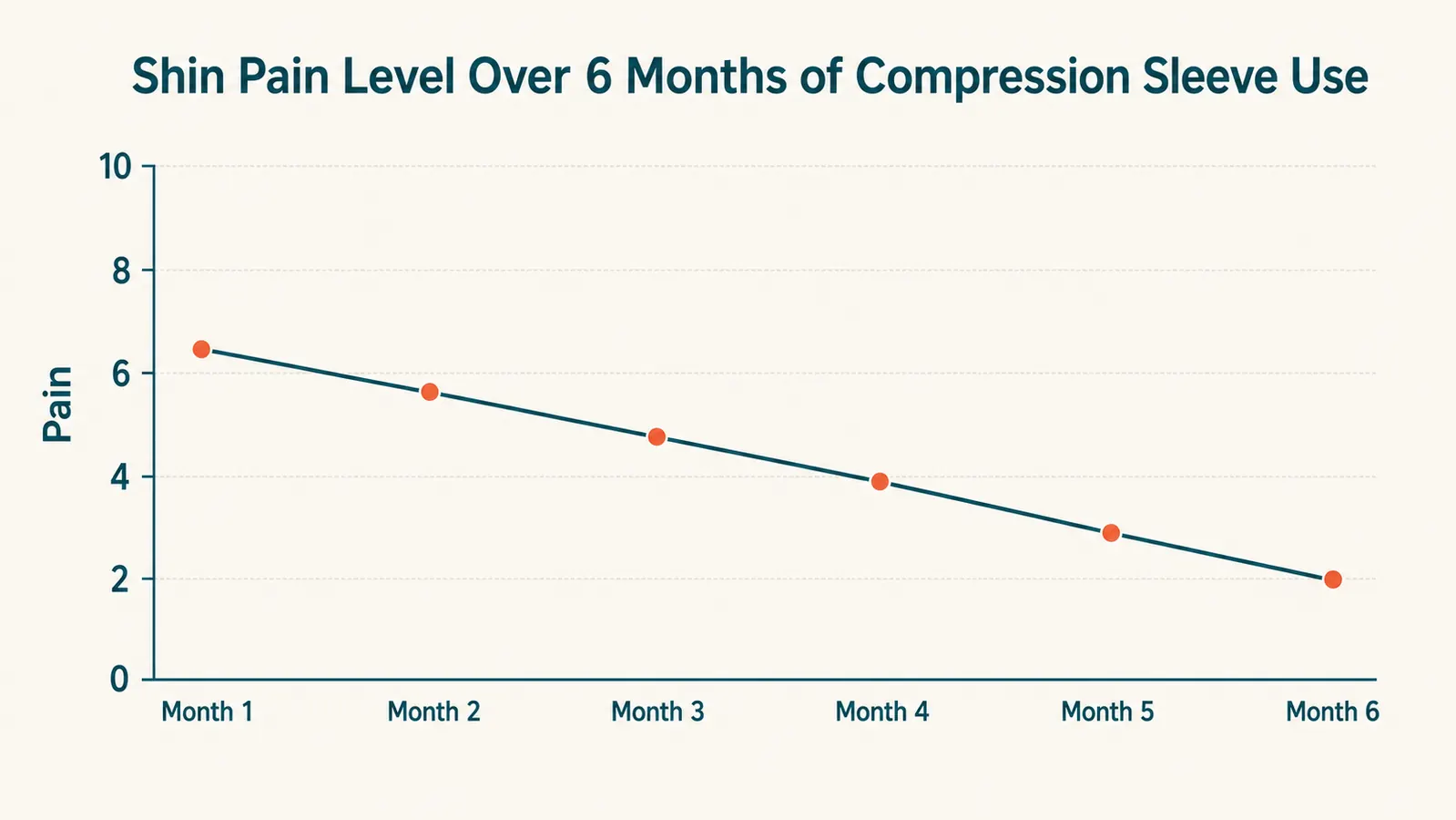
Weeks one and two I noticed the most dramatic difference. My shin soreness after a 5-mile run dropped from about a 6 to 7 pre-sleeve down to around a 3 to 4 post-sleeve. That is still soreness, but it is the kind you can walk through comfortably and does not drag into the next morning. By week four, after I had dialed in my sizing and the sleeves had broken in slightly to conform to my calf shape, I was finishing the same distance at a 2 out of 10. The calf muscle felt more supported through heel strike, which is where most of my shin trouble was originating.
The half-marathon was the real test. Miles 9 through 11 are where my shins historically start yelling at me, regardless of how well the first half of the race goes. With the BLITZU sleeves on, I hit mile 9 and noticed I was waiting for the familiar burn that never arrived at the usual intensity. I finished at about a 3 out of 10 on shin discomfort, which for me, mid-race at that mileage, is practically nothing. I completed the race and walked to the car without the zombie shuffle I had accepted as normal after any run over ten miles.
I want to be honest about what these sleeves are not. They are not a replacement for addressing the root cause of shin splints, whether that is overstriding, too-fast mileage increases, weak hip abductors, or shoes that are past their mileage limit. I worked on all of those factors in parallel during this six-month window with intentional run mechanics work and a proper shoe replacement at month three. The BLITZU sleeve is a symptom manager, and a genuinely good one, but it works best alongside actual corrective work. Buying a compression sleeve and ignoring everything else will only get you so far.
I hit mile 9 and waited for the familiar burn that never arrived. Finished the half at a 3 out of 10 on shin discomfort. For me, mid-race at that mileage, that is practically nothing.
Durability After 80-Plus Washes: The Real Long-Term Story
The compression integrity is the metric that matters most for longevity, and I am happy to report that the snugness on both pairs feels essentially the same as it did when new. The elastic fibers have not gone slack. The sleeve still takes a meaningful pull to work up over the calf. I wash these in cold water on the gentle cycle and hang-dry them on a rack. I have never put them in the dryer. Tumble-drying compression gear repeatedly degrades the elastic fibers faster, and that is true of every compression product I have ever owned, not just BLITZU.
The stitching is holding on both pairs with zero signs of unraveling at the seams or the edge bands. The color has faded maybe one shade from the original black, which is visible only if you hold a new pair next to the worn pair in direct light, but not noticeable during use. The silicone grip band at the top calf, which prevents the sleeve from sliding down during a run, has maintained its tackiness. That grip band is the first thing to fail on cheap compression sleeves, and these have not shown any deterioration after several months of hard use.
BLITZU vs What Else I Tried
Before landing on BLITZU I worked through two other options. A no-name sleeve from a big-box sporting goods store that cost roughly the same: the grip band failed at eight washes and the sleeve was pooling around my ankle by mile two of any run over five miles. I also tried a premium brand, spending almost five times more per pair, and while the fabric feel was slightly more refined, my actual shin soreness outcomes over six weeks were essentially identical to what I get from BLITZU. For most recreational runners and garage-gym athletes, the extra spend buys you a marginally softer hand-feel, not meaningfully better results.
If you want a full side-by-side breakdown of BLITZU against CEP Compression Socks specifically, that comparison covers price, feel, mmHg accuracy, and which one is worth it at different experience levels. The short version for those who just want an answer: CEP wins on full-foot coverage and premium fabric performance; BLITZU wins on price, footless flexibility, and durability per dollar. Which matters to you depends on your budget and whether foot coverage is on your priority list. For shin splints specifically, the footless BLITZU does everything you need it to do.
For the science side, the roundup of evidence-backed reasons compression sleeves help runners covers the blood-flow and lactate-clearance mechanisms without the marketing language. Worth a read if you are skeptical whether compression gear has real physiological effects or is mostly placebo.
What I Liked
- Compression holds after 80-plus washes when cold-washed and hang-dried
- Footless design lets you pair with any sock, eliminates toe seam distraction on long runs
- Silicone grip band stays put through 10-plus mile efforts without bunching or sliding
- 20-30mmHg rating provides real therapeutic compression, not just mild support
- Available in multiple colors, accurate sizing chart on the product page
- Price makes two-pair rotation practical for daily training without breaking the budget
Where It Falls Short
- Sizing is unforgiving if you guess rather than measure at the widest calf point
- Footless coverage leaves the foot unsupported, not ideal if plantar fasciitis is a co-issue
- Color fades noticeably after high wash counts, though function is completely unaffected
- No published third-party mmHg verification, you are trusting the brand's own compression rating
Who This Is For
You are a runner logging somewhere between 15 and 35 miles a week, you have dealt with shin splints before or are managing them right now, and you want a tool that reduces soreness accumulation between training days without a big financial commitment or a complicated protocol. You are not expecting a sleeve to cure a structural issue, but you want meaningful day-to-day symptom management while you work on the actual root cause. You also do not want to spend a premium testing whether compression even helps your specific body before you know it works for you. BLITZU is exactly the right starting point. The price is low enough that a wrong-size reorder is not a financial event, and the durability is good enough that once you nail the fit, you have a legitimate training tool that holds up through a full season.
Who Should Skip It
If you have diagnosed peripheral vascular disease, diabetes with nerve involvement, or any condition where a physician has specifically told you to avoid compression garments, compression sleeves in general require a medical conversation first, and this review should not be your decision-making tool. If your primary issue is plantar fasciitis rather than shin splints or calf tightness, the footless design leaves the arch and heel entirely uncovered. A full-foot compression sock would serve you better. If you are a competitive runner or triathlete who needs consistent, race-verified mmHg ratings and premium fabric performance for podium days, there are more expensive options built with that specification. BLITZU is a workhorse for everyday hard training. It is not marketed as a race-day performance sleeve and you should not expect it to behave like one.
Still running through shin pain every time your mileage bumps up? BLITZU costs less than a bag of ice and lasts a full training cycle.
Over 24,000 runners have rated it 4.5 stars. Two pairs are affordable and give you a daily rotation without mid-week laundry. Check the current price and size chart on Amazon.
Amazon Check Today's Price on Amazon →