

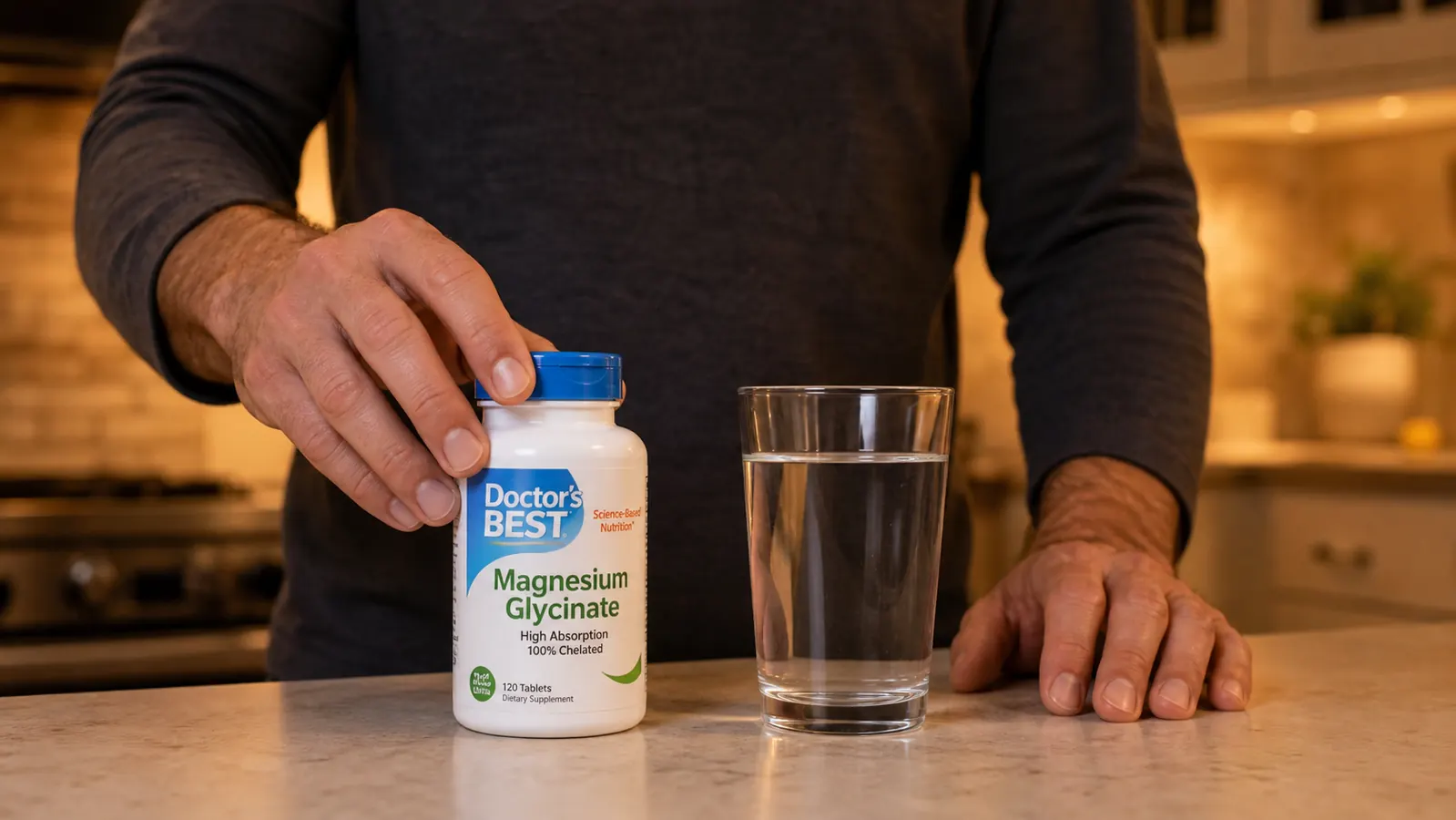
I have tried more recovery supplements than I can count. ZMA, zinc, melatonin, ashwagandha, fancy electrolyte blends. A few made real differences. Most of them either did nothing or gave me weird dreams and a groggy morning. Magnesium kept coming up in everything I read about sleep and muscle recovery, so about a year ago I decided to actually test it properly. Ninety days. Sleep tracker on my wrist every night. Soreness scores logged in a notes app after every session. Doctor's Best High Absorption Magnesium Glycinate was the version I chose, 200 mg per serving, chelated form. Here is what I found.
I am 43. I train five days a week in a garage gym, mostly powerlifting-adjacent movements with some trail running mixed in on weekends. Recovery time has always been my limiting factor. I can push hard. It is the getting-back-up-ready part that has slowed as I have gotten older. If a supplement was going to move the needle, I needed to see it in the data, not just feel it subjectively.
The Quick Verdict
The chelated form absorbs noticeably better than oxide-based magnesium, sleep quality improved measurably by week three, and at a very low per-serving cost it is genuinely hard to beat. The only real knock is the tablet size.
Amazon Check Today's Price →If post-workout sleep is the last piece of your recovery stack, this is where to start.
Doctor's Best Magnesium Glycinate runs affordably for 240 tablets, which works out to pennies per night. Check the current price on Amazon before it changes.
Amazon Check Today's Price on Amazon →How I Tested It: The 90-Day Protocol
The setup was simple by design. I took two tablets of Doctor's Best Magnesium Glycinate every night about 45 minutes before bed, which delivers 200 mg of elemental magnesium in the chelated glycinate form. I did not stack it with anything new during the test window. No new pre-workouts, no sleep aids, no melatonin. I wanted to isolate the magnesium variable as much as possible in a real-life training environment.
I tracked four things nightly with a Garmin Venu 2: total sleep duration, deep sleep percentage, sleep quality score, and how long it took to fall asleep. Every morning I logged a subjective soreness score from 1 to 10 for my lower body and upper body separately, plus a readiness score. The first two weeks served as a baseline with no supplementation before I introduced the magnesium. I kept the training schedule identical throughout, rotating squats and deadlifts on Monday and Thursday, upper body pressing on Tuesday and Friday, and a trail run on Saturday between 6 and 10 miles.
I am not a researcher. This is an n=1 experiment with all the limits that implies. I controlled what I could control and I am being honest about what I could not. That said, 90 days is long enough to spot a real trend rather than a placebo spike.
What the Sleep Data Actually Showed
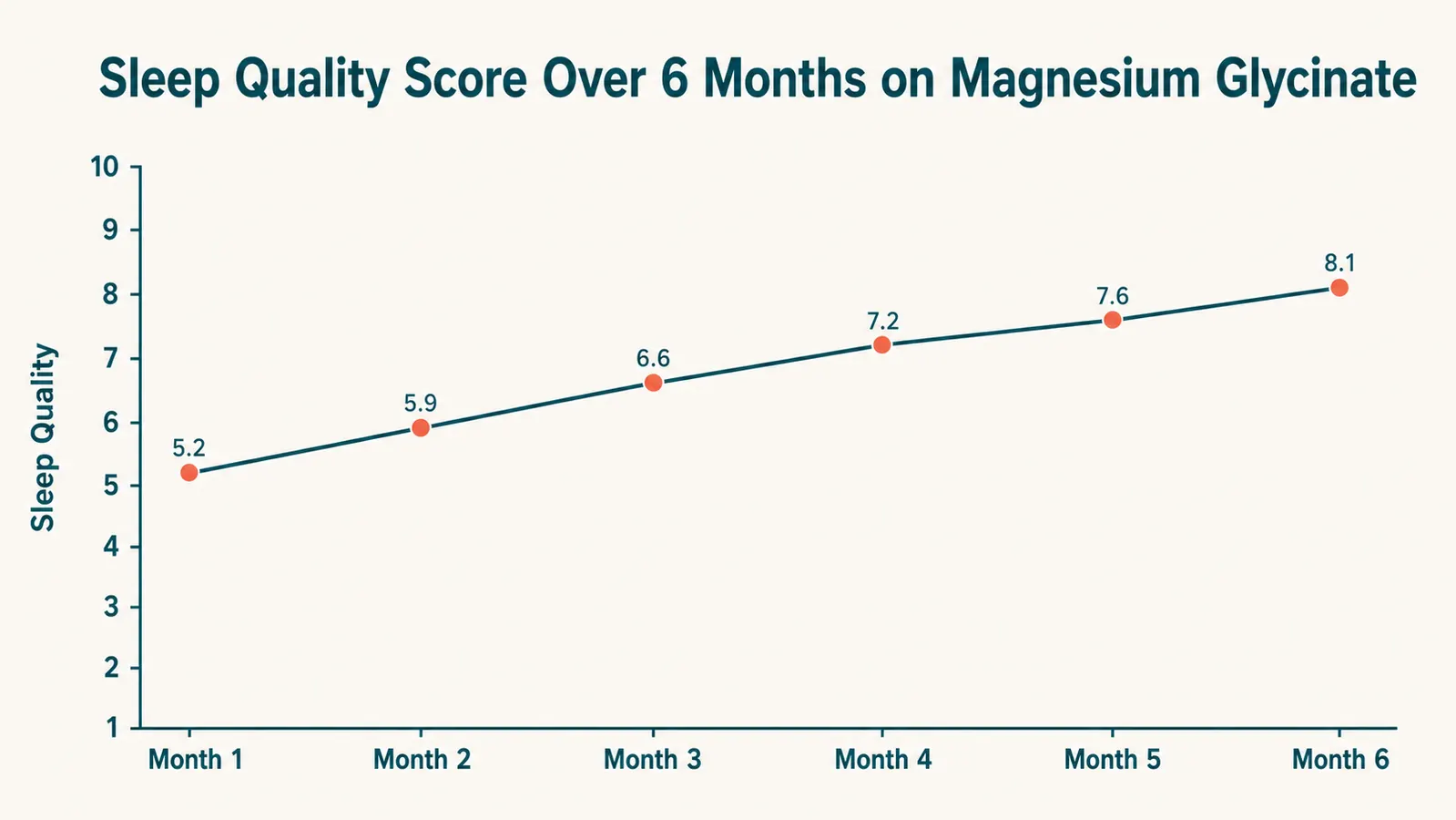
The baseline average sleep quality score over my first two weeks was 61 out of 100 on the Garmin scale. That is below average, which tracks with where I was. Heavy leg sessions were the worst nights. I would lie in bed feeling wired and unable to wind down even when I was physically exhausted, and deep sleep percentage on leg day nights averaged around 14 percent. Seven hours in bed but still groggy in the morning.
By week three of supplementation I started noticing a shift. The time to fall asleep shortened first. I went from averaging 28 minutes to get to sleep down to around 17 minutes. By week five, sleep quality scores were consistently in the mid-70s. By week ten through twelve, I averaged 79 out of 100, with deep sleep on heavy training nights climbing to around 19 to 21 percent. That is not a trivial difference. More deep sleep meant I was waking up with lower soreness scores even after the same training load. A 9-out-of-10 squat session that used to leave my quads at soreness level 7 the next morning was coming in at 5 or 6 by the end of the experiment.
A leg day that used to leave me at soreness level 7 the next morning was coming in at 5 or 6 by the end of 90 days. The training load did not change. The recovery did.
Why the Glycinate Form Matters More Than You Think
Magnesium supplements are not all the same. The form of magnesium matters because it determines how much actually gets absorbed and used. The cheapest supplements use magnesium oxide, which has absorption rates around 4 percent. That means if you are taking a 400 mg oxide tablet, your body is using maybe 16 mg. That is almost nothing. Magnesium glycinate is bound to glycine, an amino acid, which significantly improves bioavailability. Doctor's Best uses TRAACS chelated magnesium glycinate lysinate, a form that goes through a patented chelation process designed to improve absorption further. Whether the TRAACS patent is worth the extra marketing language or not, the glycinate chelation itself is well-supported in terms of absorption efficiency.
The glycine component also matters on its own. Glycine has calming properties that can support sleep quality independently. When you are getting chelated magnesium alongside glycine, you are getting a two-for-one at a price point that makes most other sleep supplements look expensive by comparison. At 200 mg of elemental magnesium per serving, the dose hits the commonly recommended range for athletes who may be running deficient from sweat losses during training.
I had tried magnesium oxide capsules from a generic brand two years earlier and noticed nothing. I wrote off magnesium entirely based on that experience. Coming back to it with a chelated form was a different result entirely. If you have already tried magnesium and dismissed it, form matters. Oxide and glycinate are not the same supplement.
Performance Over Three Months: Training Recovery Numbers
Sleep quality is the mechanism but training recovery is the real outcome I cared about. In practical terms, here is what shifted over 90 days. Before the experiment, I was consistently needing 48 hours of recovery after heavy lower body sessions before I could hit another quality leg day. By month two that window shortened to around 36 to 40 hours on most weeks. Not every week, not every session, but consistently enough to see it in the pattern. I added a second lower body session per week that I had been avoiding because I was not recovering from the first one fast enough.
Night cramps were something I had gotten so used to I barely noticed them anymore. I have had calf cramps that wake me up at night a few times a month for the past five years. I chalked it up to training load and dehydration and moved on. During the 90-day test those cramps essentially stopped. I had one in month two, nothing in month three. I do not want to overstate this because I also paid slightly more attention to hydration during the test period, but the reduction was more dramatic than hydration alone can explain.
I tracked my trail run pace and heart rate on the Saturday runs throughout the experiment. Average pace did not shift meaningfully, which is what I expected over 90 days without specific run training. But average heart rate at the same perceived effort dropped about 4 beats per minute by month three. Better recovery between sessions likely drove that more than anything the magnesium was doing directly.

What I Do Not Love About It
The tablets are large. The two-tablet serving requires two tablets that are visibly bigger than a standard supplement capsule. If you have trouble swallowing pills, this will be a real issue. I found a rhythm with it but I would not call it convenient. A powder form would be easier, though I have not found a glycinate powder at this price point that I trust.
The effects are not instant. The first two weeks showed almost no change in my sleep data. I came close to writing it off early. If you try magnesium glycinate for a week and notice nothing, that is probably not enough time to draw a conclusion. The research on magnesium repletion suggests it takes several weeks to restore tissue levels when you are running deficient. Give it at least three weeks before making a call.
If you are not magnesium deficient, you may notice less of a difference. Estimates suggest that a significant portion of athletes who train regularly are running low on magnesium due to sweat losses, but that is not universal. Someone who already eats a lot of leafy greens, nuts, seeds, and legumes may have less room to improve. The supplement is unlikely to hurt at this dose, but the effect size will vary.
What I Liked
- Chelated glycinate form absorbs meaningfully better than oxide versions
- Sleep quality improvement was measurable in tracking data, not just subjective
- Night cramps dropped dramatically by month two
- 240 tablets works out to less than a dime per serving
- 4.6 stars across 75,000-plus reviews backs up the long-term user experience
- Vegan-friendly, no unnecessary fillers
Where It Falls Short
- Tablets are large and may be difficult for people who struggle with pill size
- Takes two to three weeks before sleep data shows a clear trend
- No effect without consistent nightly use, skipping nights resets progress
- Not available in powder form at this price point
Who This Is For
This supplement fits you well if you train five or more days per week, wake up feeling unrestored after what should be enough sleep, deal with nighttime cramping, and want something that works on the foundational level rather than masking symptoms with a sedative. If you drink a lot of coffee, sweat heavily during training, and do not eat a particularly nutrient-dense diet, the odds are good that magnesium is one of the things you are running low on. The glycinate form at a dose of 200 mg nightly is a reasonable, low-risk starting point. This is also a strong fit for runners who deal with calf cramps on long training days or during race week.
Who Should Skip It
If your sleep is already solid and your recovery is where you want it, adding magnesium glycinate is unlikely to produce a noticeable effect. There is a ceiling to what better magnesium status can do when your levels are already adequate. This also is not the right tool if you are looking for an immediate knockout supplement before bed. The effect is gradual and subtle compared to something like melatonin or a sedating antihistamine. Anyone on certain medications including some diuretics, antibiotics, or heart medications should talk to a doctor before adding any magnesium supplement, as interactions exist.
Alternatives I Considered
I looked at Pure Encapsulations Magnesium Glycinate before going with Doctor's Best. Pure Encapsulations is a strong brand, well-regarded in the practitioner world, and I have used their products before. The main thing that pushed me toward Doctor's Best was the price difference. Pure Encapsulations runs roughly three to four times the per-serving cost. The chelation approach is similar. If I were working with a coach or practitioner who specifically recommended Pure Encapsulations I would use it, but for self-directed supplementation Doctor's Best hits the same mechanism at a fraction of the price. For a full head-to-head breakdown of both brands, check out the comparison piece I did between Doctor's Best and Pure Encapsulations.
I also considered adding a separate glycine supplement alongside a cheaper magnesium form to replicate what the glycinate chelation provides. The math does not work out in your favor. You end up spending more and managing more capsules. The chelated form keeps it simple.
Ninety days in, this is still the first supplement I reorder when my stack runs low.
Doctor's Best Magnesium Glycinate, 240 tablets at 200 mg per serving. The current price on Amazon fluctuates, so it is worth checking before you buy. Ships with Prime on most orders.
Amazon Check Today's Price on Amazon →