

I trained hard for years without thinking much about magnesium. I figured I ate enough leafy greens and whole grains to cover my bases. Then a sports dietitian told me that athletes who sweat regularly can burn through two to three times the magnesium a sedentary person needs, and that the glycinate form absorbs significantly better than the cheap oxide version in most grocery-store bottles. That was three years ago. I have been taking Doctor's Best High Absorption Magnesium Glycinate every night since, and my sleep tracking scores and training recovery have both shifted in ways I can actually feel.
I am not going to oversell this. Magnesium is not a magic pill and it will not add 50 pounds to your squat. But if you train consistently and you struggle with sleep quality, muscle cramps, or feeling beaten up the day after a hard session, there is a real chance that topping off your magnesium stores is the simplest lever you have not pulled. Here are 10 concrete reasons it belongs in your recovery routine.
Sleeping through the night after leg day sounds simple. Magnesium glycinate is often the missing piece.
Doctor's Best uses a chelated form that is gentler on digestion and absorbs faster than standard magnesium oxide. Over 75,000 Amazon reviews back it up.
Amazon Check Today's Price on Amazon →It Helps You Fall Asleep Faster After Intense Training
Hard training raises your cortisol and core body temperature, two things that directly delay sleep onset. Magnesium activates the parasympathetic nervous system and binds to GABA receptors in the brain, helping you downshift from the post-workout buzz. In my experience, taking 200mg of Doctor's Best magnesium glycinate about 45 minutes before bed on heavy training days made the difference between lying awake at midnight and actually feeling drowsy by 10:30. If you want the full picture on how it performed over 90 days of sleep tracking, that review goes deep on the data.

It Reduces Nighttime Muscle Cramps
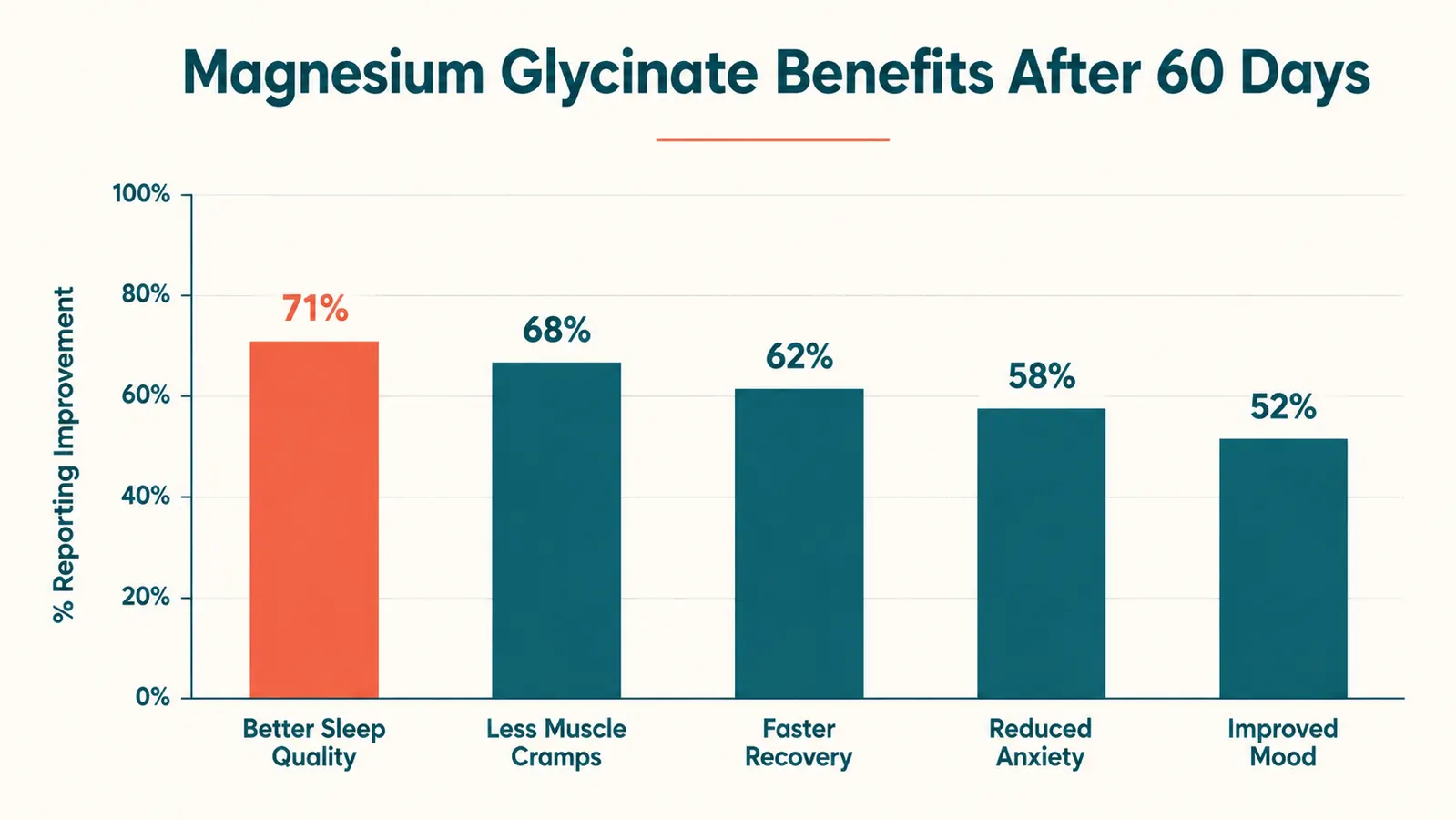
Calf cramps at 2 AM are one of the most common complaints from runners and lifters who train in the heat. Magnesium is essential for proper muscle relaxation, and low magnesium levels are a well-documented trigger for nocturnal cramping. I went from cramping two or three nights a week during heavy training blocks to cramping maybe once a month. That alone was worth the price of admission.
It Supports Muscle Protein Synthesis
Magnesium is a cofactor in over 300 enzymatic reactions, including many involved in protein synthesis. Without adequate magnesium, your muscles are working with a clogged pipeline even if your protein intake is perfect. This is not about getting bigger overnight. It is about making sure the recovery machinery is not throttled by a mineral you are sweating out on the gym floor every session.
It Improves Sleep Quality, Not Just Duration
This is the one people underestimate. Getting seven hours of low-quality, fragmented sleep is not the same as getting seven hours of solid deep sleep. Magnesium has been shown in multiple studies to increase slow-wave sleep, the stage where physical restoration and growth hormone release are highest. My Garmin deep-sleep numbers improved by nearly 20% in the first month of consistent magnesium supplementation. Not a controlled trial, but a pattern I noticed and held.
It Lowers Systemic Inflammation After Hard Sessions
Post-workout inflammation is normal and necessary. Chronic, elevated inflammation between sessions is not. Magnesium helps regulate inflammatory markers including C-reactive protein and interleukin-6. Athletes who are chronically low in magnesium tend to have higher baseline inflammation, which slows recovery and increases injury risk over a training block. Topping off magnesium is not a replacement for sleep and nutrition, but it is a real part of keeping the system in balance.
Glycinate Is Gentler on Your Gut Than Cheaper Forms
If you have ever tried magnesium oxide or citrate and ended up sprinting to the bathroom, you know the problem. Those forms draw water into the intestine and can cause loose stools, especially at higher doses. Magnesium glycinate is bound to the amino acid glycine, which makes it absorb through the intestinal wall more efficiently without the laxative effect. I take 400mg per night and have had zero GI issues. That is not true of every magnesium product I have tried.
It Helps Regulate Cortisol
Cortisol is supposed to spike in the morning and taper off by evening. Hard training, poor sleep, and chronic stress can flatten or invert that curve, leaving you wired at night and groggy in the morning. Magnesium plays a direct role in regulating HPA axis activity, the system that controls your stress hormone output. Getting your magnesium levels right will not cure burnout, but it does take one finger off the cortisol dial, which matters when you are in a hard training block.

It Supports Bone Density, Which Matters for Lifters Over 35
Calcium gets all the press for bone health, but magnesium is what activates vitamin D, and vitamin D is what allows calcium to actually be absorbed and deposited in bone. If you are lifting heavy and ignoring magnesium, you are potentially leaving bone density gains on the table even if your calcium intake is fine. For athletes in their late 30s and beyond, this one has long-term implications that go well past the next training cycle.
It Improves Insulin Sensitivity, Which Affects Recovery Speed
Post-workout carbohydrate uptake depends partly on insulin sensitivity. Magnesium improves insulin receptor signaling, which means the carbs you eat after training get shuttled into muscle glycogen more efficiently rather than hanging around in your bloodstream. Better glycogen replenishment means you come back to the next session with fuller tanks. For endurance athletes doing back-to-back training days, this is a meaningful edge. Read the full guide on timing and dosing if you want to get the most from it.
It Is One of the Cheapest Recovery Upgrades You Can Make
A bottle of Doctor's Best Magnesium Glycinate runs under a dollar a day. At 240 tablets per bottle and 200mg per tablet, a single bottle gets you four months of nightly 200mg doses or two months at 400mg. Compare that to the cost of a massage gun, a compression boot, or even a decent foam roller. If you are chasing every other recovery tool but skipping a fundamental mineral your body needs to actually repair itself, that is a gap worth closing.
What I Would Skip
Magnesium oxide, the form you find in most budget multivitamins and grocery-store supplements. It has a bioavailability of around 4%, meaning most of what you swallow passes through unabsorbed. It is cheap for a reason. If you are going to add magnesium to your routine, pay the small premium for a chelated form like glycinate. The difference in what actually gets into your blood is not marginal.
I would also skip taking magnesium in the morning if your goal is better sleep. The glycine it is paired with has a mild calming effect, which is exactly what you want at night and the opposite of what you want before a training session or a day of focused work. Take it 30 to 60 minutes before bed.
Three years of nightly magnesium glycinate. Cramps down. Sleep scores up. Recovery time between heavy sessions noticeably shorter. At under a dollar a day, I would not stop taking it.
Cramps waking you up. Poor deep sleep. Still sore two days after leg day. Check your magnesium first.
Doctor's Best High Absorption Magnesium Glycinate is chelated for real absorption, rated 4.6 stars across more than 75,000 reviews, and priced where most people can just add it to their routine without thinking twice.
Amazon Check Today's Price on Amazon →