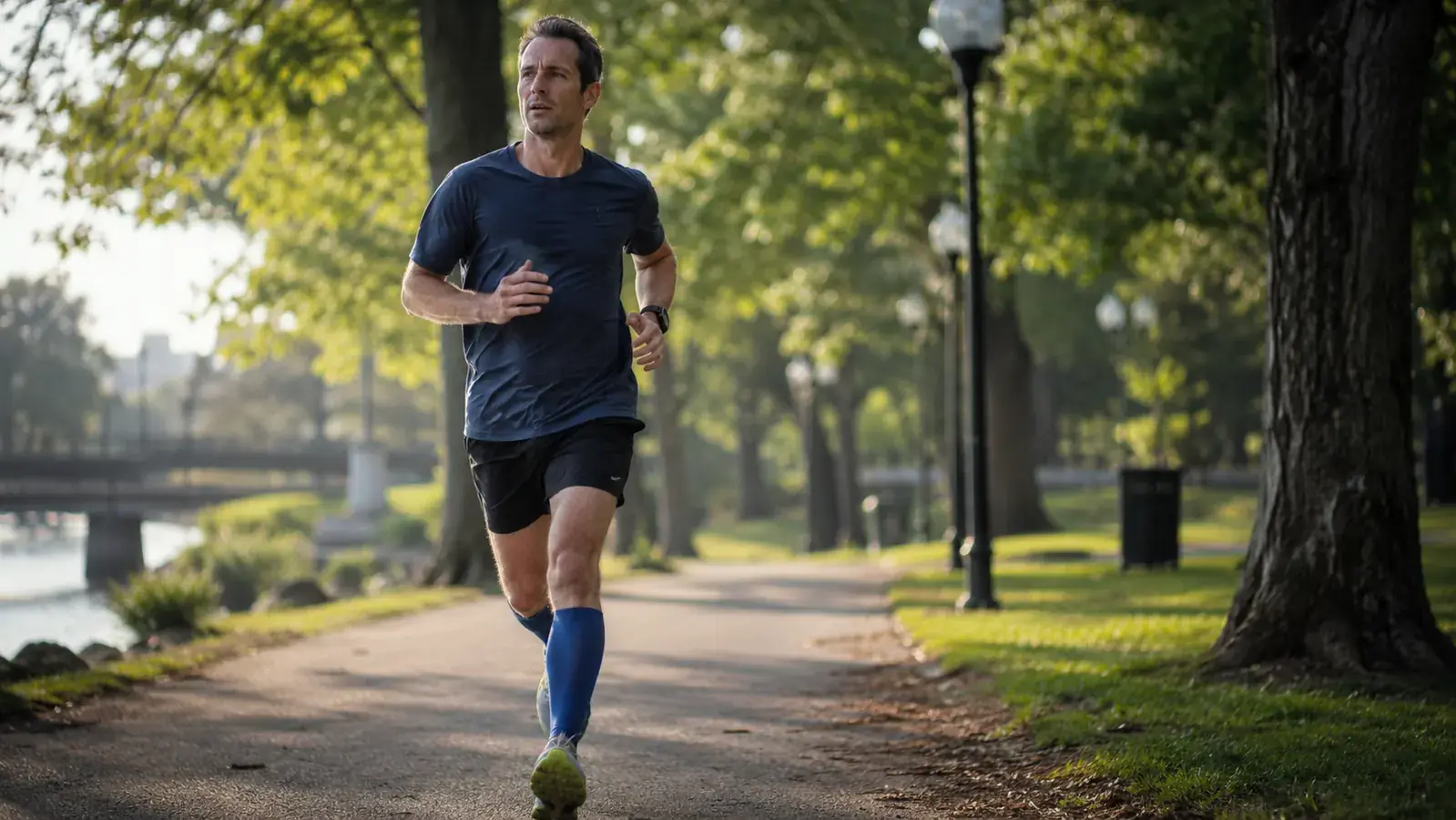
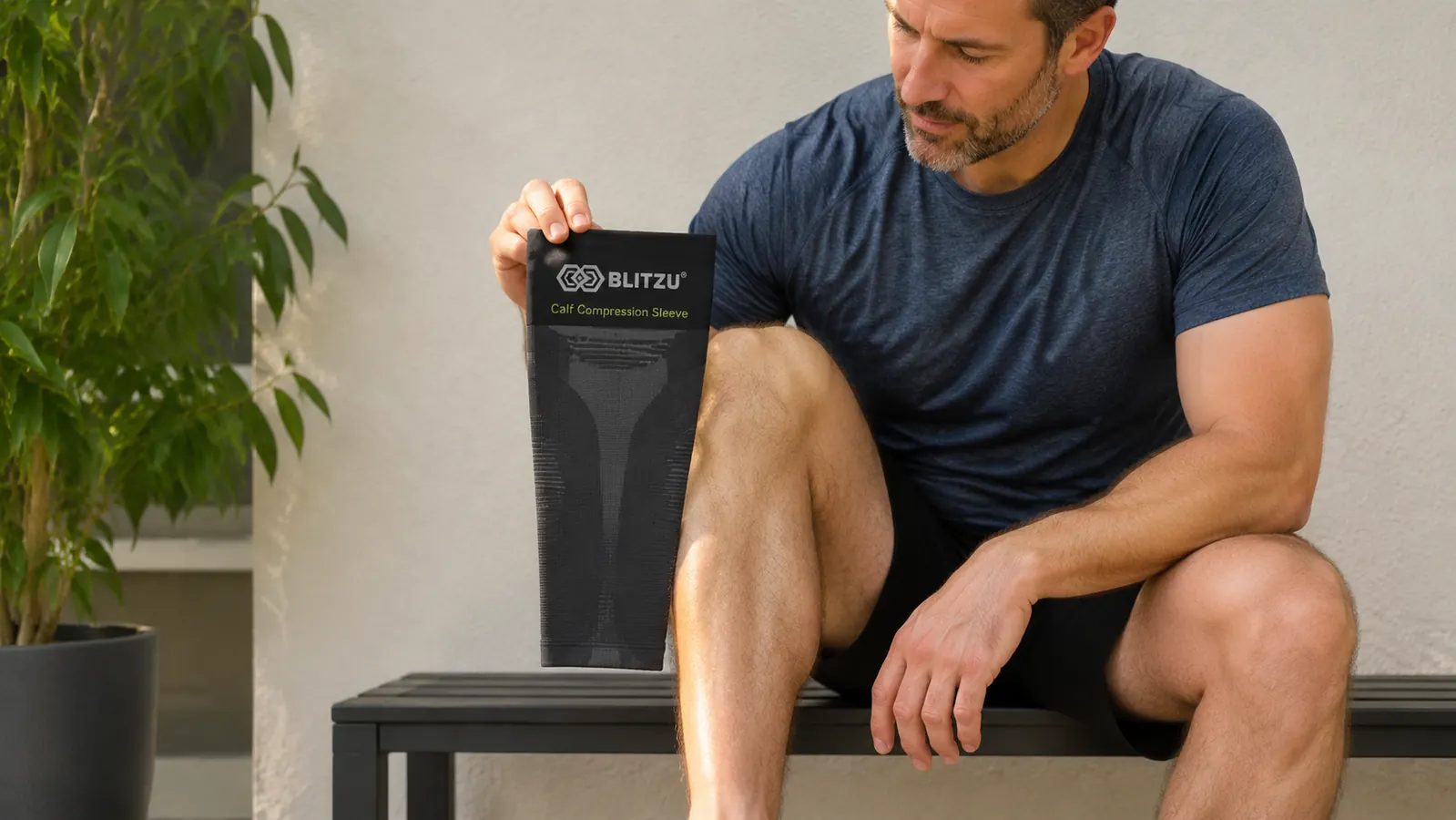
Let me start with the thing that messes up about a third of first-time buyers: the BLITZU sizing chart is optimistic. I wear a size 11.5 shoe and my calves measure about 15.5 inches at the widest point. According to BLITZU's chart, that puts me solidly in Large. My first pair felt like a blood pressure cuff from the minute I pulled it on. I ran two miles and my lower leg went numb below the knee. I swapped to XL and the sleeve worked fine. So before you look at the price and think, 'what's the risk?' -- know that your first order might be the wrong size. The return process works, but it adds friction to what should be a simple purchase.
I have put roughly 400 miles on multiple pairs of the BLITZU Calf Compression Sleeve over the past eight months, running road and trail. I have washed them more times than I can count, worn them during races, worn them on recovery days on the couch, and taken them off mid-run when the fit went wrong. What follows is the unfiltered version of my experience, including the parts the product listing does not mention and the parts I wish someone had told me before my first order.
The Quick Verdict
A genuinely useful compression sleeve at a price that makes sizing mistakes cheap to fix, but the compression rating fades with washing, the sizing chart runs small, and it offers limited benefit to runners without a specific lower-leg complaint.
Amazon Check Today's Price →If your calves cramp mid-run or swell on long efforts, this sleeve is worth the test at current prices.
The BLITZU Calf Compression Sleeve has over 24,000 reviews on Amazon. Size up one from what the chart says, and check the current price before you buy a two-pack.
Amazon Check Today's Price on Amazon →How I've Used It: 400 Miles and a Lot of Laundry
My testing wasn't controlled. I'm a 43-year-old garage-gym lifter who runs trails on weekends and hits the roads two to three times a week during training blocks. I started wearing the BLITZU sleeves after a hamstring cramp during a 10-mile run convinced me to pay more attention to my lower legs. I bought a pair, liked the feel enough to buy two more, and eventually cycled all three pairs through a 14-week half-marathon prep block. Each pair got washed after every run and worn hard.
I logged subjective recovery notes after long runs, noting calf fatigue on a 1-10 scale and any cramping or tightness the following morning. I also tracked wash count per pair because I wanted to know how long the elastic actually lasts. Spoiler: the honest answer is about 40 to 50 machine washes before you notice the sleeve starting to feel more like a snug sock than a compression garment.
I wore the sleeves during a trail half-marathon in April, a flat road 10K in May, and two back-to-back 13-mile training weeks in June. I also wore them off the legs, sitting at my desk post-run on days when my calves felt especially tight. That variety of use gave me a pretty complete picture of what this sleeve does well and where it falls short.
The Sizing Problem Is Real and Specific
The BLITZU size chart lists calf circumferences in ranges. The problem is the ranges are tight, and for people who land at the top end of a size range, the sleeve compresses harder than the listed 20-30 mmHg. That range is supposed to be therapeutic compression, the same level a doctor might recommend for varicose veins or post-surgical swelling management. When it runs tight, you can push into 30-40 mmHg territory, which is medical-grade compression. That is not dangerous for a healthy person on a 45-minute run. But it is uncomfortable, and on longer efforts it can cause the calf fatigue it's supposed to prevent.
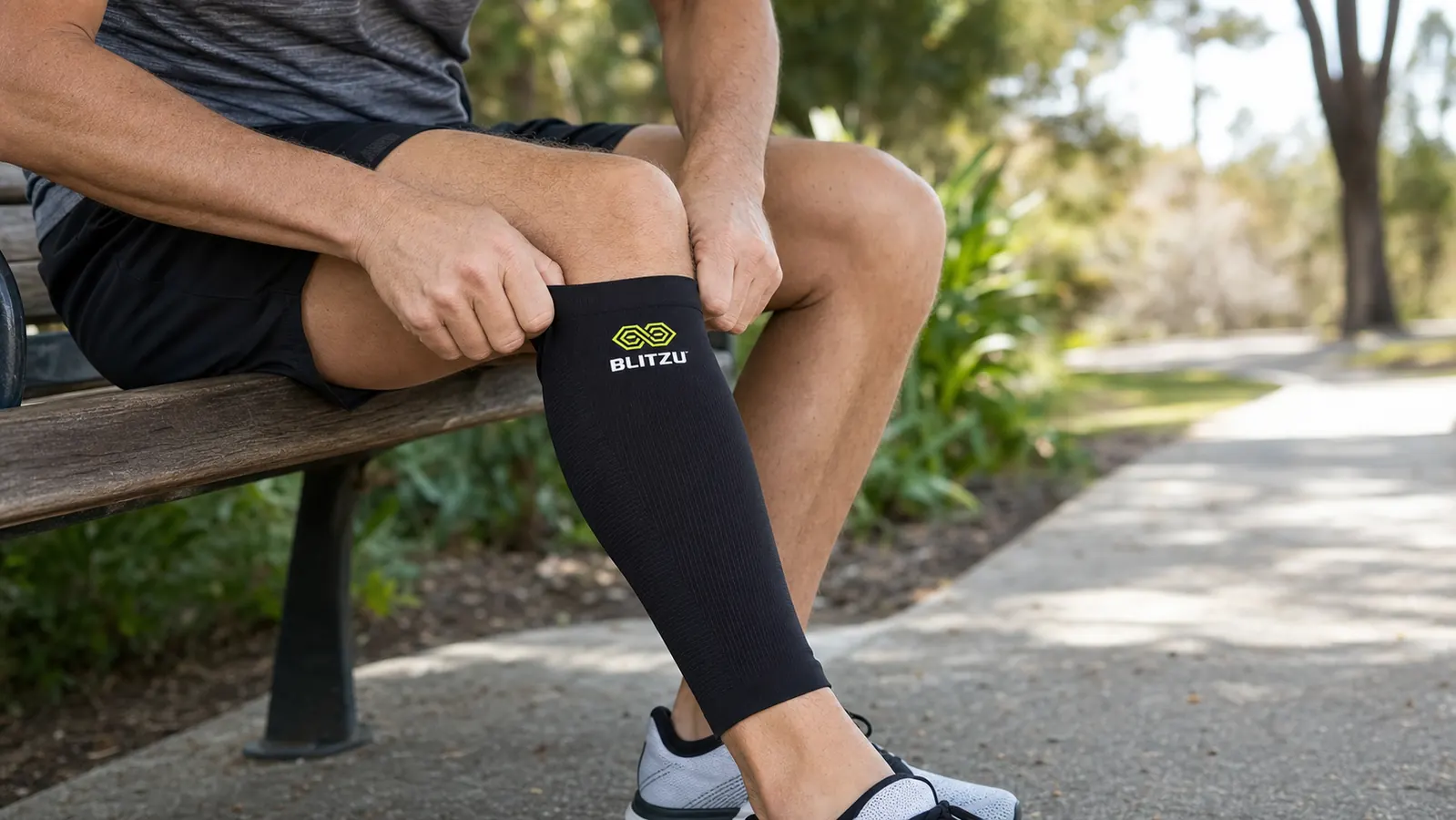
My rule: if your calf measurement falls in the upper 25% of any size range, order the next size up. BLITZU's return window is reasonable, so a size exchange is not a disaster. But you will lose a week of training time waiting for the right size to arrive, which is annoying when you're mid-block. There are also reports in the reviews from runners with thick calves, specifically women with muscular lower legs and men with calves over 17 inches, saying the XL leaves marks at the sleeve's top and bottom edge. That's a sign it's still too tight. If you're in that category, a sleeve with a wider top cuff like the CEP Running compression sock might be a better fit architecture.
The Compression-Myth Question You Deserve an Honest Answer To
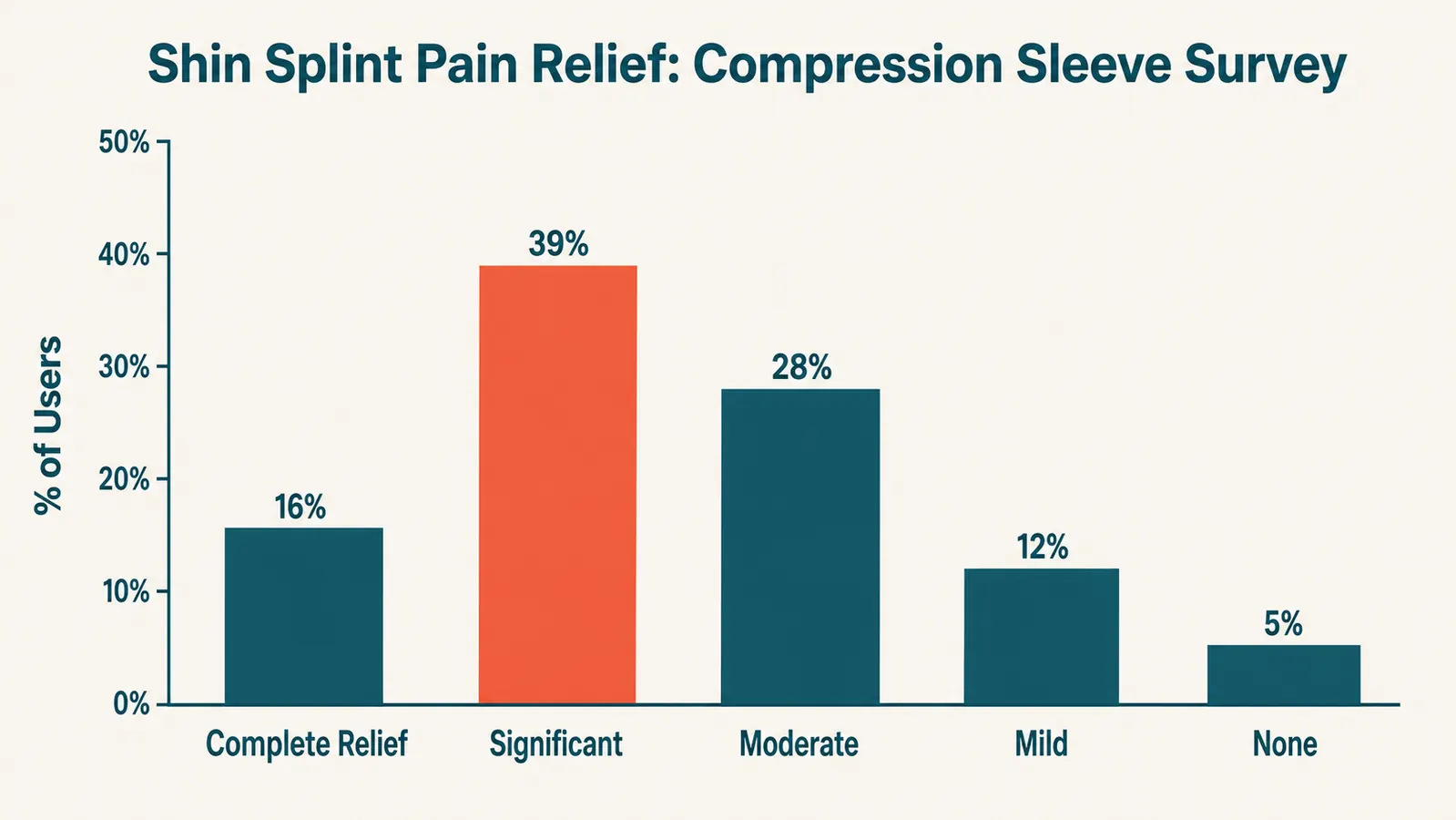
Here's the thing nobody in the five-star reviews will say: the research on calf compression sleeves for healthy recreational runners is genuinely mixed. The strongest evidence is for people with venous insufficiency, people recovering from lower-leg surgery, or travelers on long flights. For runners, the data suggests compression sleeves may reduce perceived soreness after a run, and they may help with proprioception, meaning they give your calf muscles a slight sensory cue that helps your brain stabilize the ankle. But the direct performance benefit, faster times, measurably less fatigue, improved lactate clearance, is not strongly supported in recreational athletes running under 15 miles per week.
My personal experience: the sleeves make my calves feel better while I'm running. Whether that's compression doing something physiologically useful or whether it's just the warm snug feeling that signals 'you're prepared,' I genuinely can't tell you. What I can tell you is that on days I wear them for long trail runs, I have less calf tightness the next morning than on days I don't. That's subjective. It's also consistent enough over eight months that I keep reaching for them. I'm not going to claim a mechanism I can't prove. I'm just telling you what I observe.
The research on compression sleeves for healthy recreational runners is mixed. What's not mixed is that my calves feel better the next morning when I wear them. Make of that what you will.
What Happens to the Compression After 40 Washes
This is the honest durability story nobody tells you until you've already bought three pairs. The BLITZU sleeve is 80% nylon and 20% spandex, which is a standard compression fabric blend. The spandex is what creates the compression. Spandex degrades with heat, repeated stretching, and exposure to detergent over time. BLITZU recommends hand washing and air drying, which is the right call for longevity. I machine washed mine on cold and air dried them, which is slightly harder on the fabric than hand washing but more realistic for a runner doing laundry twice a week.
At about 40 washes, my oldest pair started to feel noticeably less firm. The sleeve still goes on with some resistance, and it doesn't slide down during a run, but the snug uniformity of brand-new compression is gone. It feels more like a compression sock that's been worn out. The color also fades faster than I expected: the black pairs go charcoal-grey around 30 washes, which doesn't affect performance but does affect the 'looks new' factor. At the price point, replacing a pair every four to five months of regular use is not a budget crisis. But you should plan for it. This is not a sleeve that holds its compression for years.
Three Quirks Nobody Mentions in the Product Listing
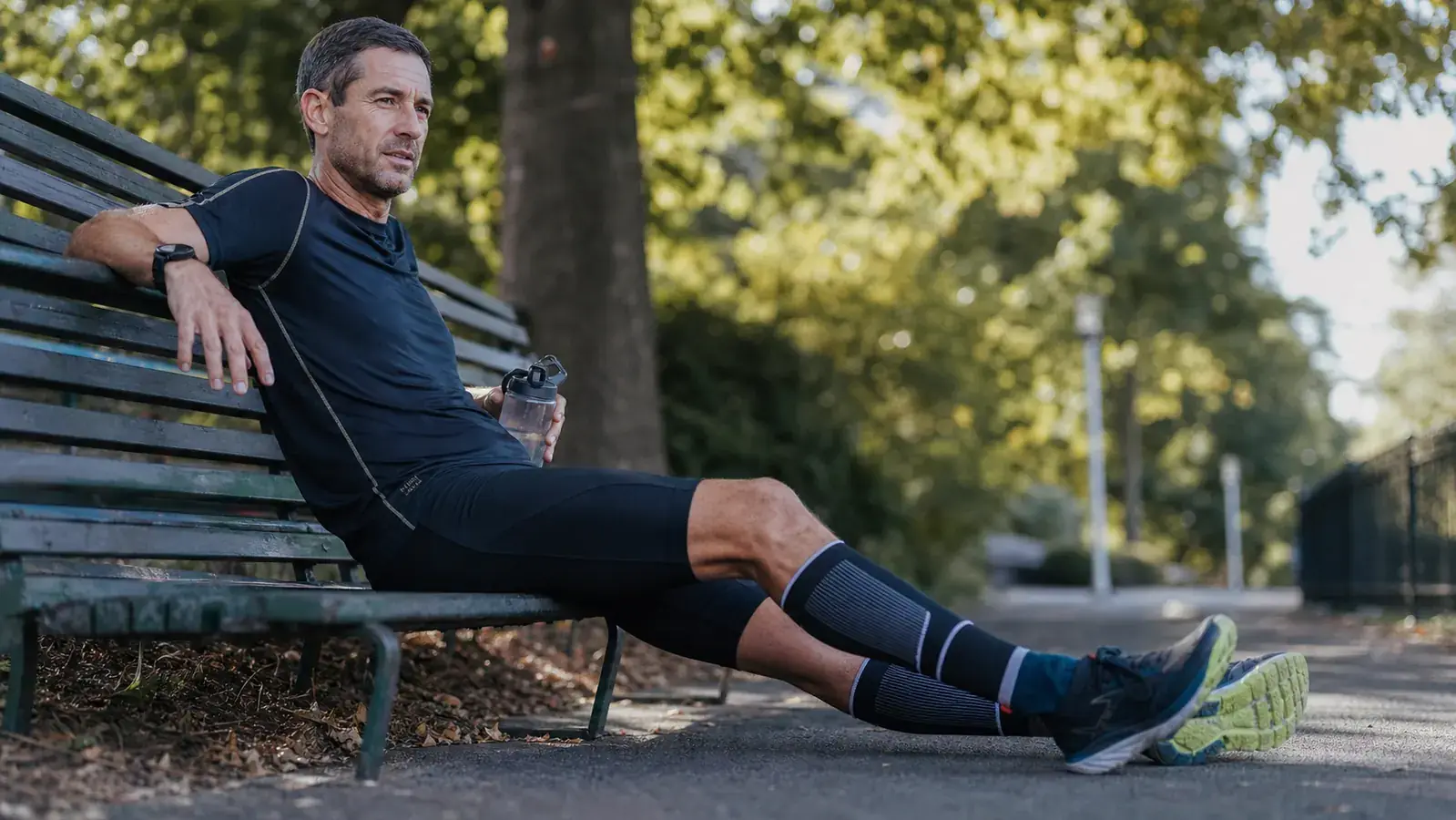
First, the footless design creates a weird pressure point at the top of the foot if the sleeve rides down. The sleeve covers calf to just above the ankle, no heel or arch support. On some runners, particularly those who pronate, the bottom edge of the sleeve migrates toward the ankle bone during a run and rubs. It hasn't caused blistering for me, but I have had to stop and readjust on runs over 8 miles. Wearing it slightly higher up the calf at the start of a run reduces this.
Second, the sleeve does not breathe as well as BLITZU's marketing suggests. On humid days or on the treadmill where there's no airflow, the calf under the sleeve gets hot and stays hot. Hot muscles are more prone to cramping for some runners, which is the opposite of what you're buying this for. On trail runs in the morning when the air is cool, the breathability is fine. In a hot gym or on a summer road run, I sometimes strip the sleeve off at mile 5 because the heat building up under the fabric outweighs the compression benefit.
Third, the sleeve's graduated compression runs from tighter at the ankle to looser at the calf, but the gradient is subtle. True graduated compression gear like CEP or 2XU has a more pronounced taper. The BLITZU feels more like mild uniform compression with a slight gradient rather than genuine graduated compression. For most recreational runners that distinction doesn't matter. If you have been told by a doctor to wear graduated compression for a specific vascular reason, the BLITZU may not deliver the clinical pressure profile you need.
The Pros and Cons After 400 Miles
What I Liked
- Price makes sizing mistakes easy to fix -- you can order two sizes and keep the better fit without financial pain
- Does reduce subjective calf soreness the morning after long runs, consistently across 8 months of use
- Stays in place during runs up to about 8 miles without needing adjustment
- Available in a wide range of colors, and the black pairs look sharp enough to wear casually
- Works well for trail and road running, hiking, and standing-heavy workdays -- versatile enough to justify owning multiple pairs
- Over 24,000 Amazon reviews give you plenty of real-world fit feedback to cross-reference against your own calf measurements
Where It Falls Short
- Sizing chart runs small -- a significant portion of buyers need to size up from what the chart recommends
- Compression fades noticeably after 40 to 50 machine washes, requiring replacement every 4 to 5 months for daily users
- Breathability is mediocre in hot or humid conditions -- sleeve traps heat in a way that can actually increase cramping risk on summer runs
- The compression gradient is subtle compared to clinical-grade or premium athletic sleeves -- not a substitute for medically prescribed compression
- Bottom edge can migrate toward the ankle on runs over 8 miles and cause minor rubbing, especially with ankle pronation
- Color fades faster than expected with regular machine washing -- black pairs go visibly grey around 30 washes
Who Should Buy the BLITZU Calf Compression Sleeve
Buy this if you run or hike regularly and want to test whether compression actually helps your specific calves without spending premium prices on a high-end sleeve to find out. At current prices, you can buy two pairs, figure out your correct size, and still come in well under what CEP or 2XU would cost. If you get value from them, great. If you don't notice anything after a month of consistent use, you're out a small amount of money and you've answered your own question about whether compression is worth pursuing further.
This sleeve is also a smart buy if you work on your feet all day, run a trail race where your calves tend to cramp in miles 10 through 13, or are recovering from a mild lower-leg strain and want some light compression support during the return-to-run phase. It is particularly well-suited for runners in the 30-to-55 age range who find their calves take longer to recover between runs than they used to. That's the use case where I personally see the clearest benefit.
Who Should Skip It
Skip the BLITZU if you have been prescribed compression by a doctor for a specific medical reason. The graduated compression profile here is not precise enough to meet clinical standards, and fit accuracy matters a great deal when compression is therapeutic rather than just supportive. Talk to your doctor or a physical therapist about fitted compression garments instead.
Skip it also if you run primarily in hot weather or on a treadmill and your calves already run hot. The heat buildup under the sleeve in non-ventilated conditions is real, and if cramping is your primary complaint, adding heat to your lower leg is not going to help. A cooling sleeve design or just running without anything on your calves may serve you better in those conditions. And skip it if you have calves over 17 inches and thick quads -- the sleeve top edge will dig in. Look at something with a wider cuff panel and stronger size options instead. The comparison between BLITZU and CEP is worth reading if you're on the fence about which direction to go: see our breakdown at the link below.
Check where your calf measurement lands before you order -- and size up if you're in the top quarter of any size range.
The BLITZU Calf Compression Sleeve is a practical, low-risk way to test whether compression gear earns a place in your recovery toolkit. See today's price and read the sizing Q&A section in the reviews before you add to cart.
Amazon Check Today's Price on Amazon →